Best Seafood Restaurants and Areas in Busan for Foreign Visitors
Choose where to eat seafood in Busan by comfort level, market ordering style, raw fish, grilled clams, cooked dishes, price checks, and travel area
A practical Busan seafood guide for choosing Jagalchi, Millak, Gwangalli, Haeundae, or Nampo by ordering style, price clarity, raw food comfort, and allergies.
Busan seafood is not one single experience. Eating raw fish at a market, ordering grilled clams by the beach, sharing a spicy seafood dish, and choosing a simple grilled fish meal all feel different. The best choice depends less on which restaurant is famous and more on how comfortable you are with market ordering, raw food, shared portions, and variable prices.
Use this guide to choose the right seafood setting before you sit down.
Choose the Seafood Experience First
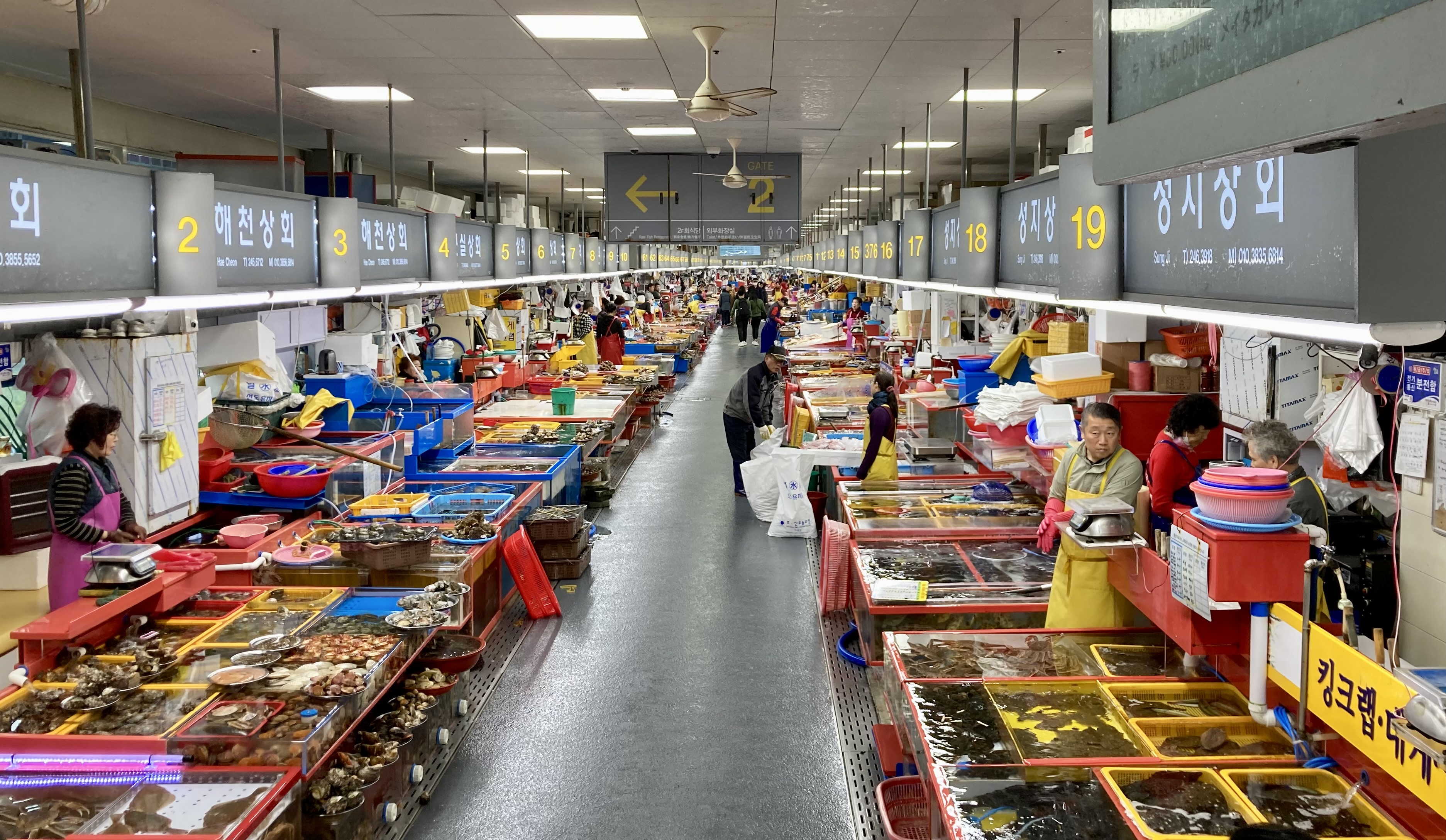
Jagalchi Market is best if you want the classic Busan fish market atmosphere. VisitKorea describes it as one of Korea's largest seafood markets, selling live and dried fish along the seaside road in Jung-gu. It is memorable, but it can feel busy and unfamiliar if you dislike negotiating, checking prices, or choosing seafood from tanks.
Millak Hoe Town and Gwangalli are better if you want seafood near the water and an evening route with Gwangan Bridge. This area can suit travelers who want raw fish or seafood followed by a beach walk.
Haeundae is easier if you want a more tourist-friendly meal near hotels, cafes, and the beach. It may feel less market-like but simpler for a first seafood dinner.
Nampo-dong works well if you are already visiting Jagalchi, BIFF Square, Gukje Market, or Bupyeong Kkangtong Market.
How Market Seafood Ordering Usually Works
At market-style places, the important step is to confirm the total cost before the food is prepared. Some places separate the seafood purchase from the upstairs or nearby dining area where the seafood is prepared and served. There may also be a preparation or table charge depending on the system.
Before agreeing, ask or confirm:
- What seafood is included.
- The total price for your group.
- Whether there is a separate preparation, table, or side-dish charge.
- Whether the seafood will be served raw, grilled, steamed, or cooked in soup.
- Whether card payment is accepted for the full amount.
This is not about being suspicious. It simply prevents confusion in a place where ordering may not work like a normal menu restaurant.
Confirm the Full Price Before Preparing Seafood
At a market counter, show the number of diners and ask “총 얼마예요?” (How much is the total?) and “조리비는 별도인가요?” (Is there a separate preparation fee?). If a dining area is involved, confirm whether the quoted amount covers the seafood, preparation and table charges. Photograph or note the agreed item and total only if the seller is comfortable with it. Walk away before ordering if you cannot understand what is included.
If you have a fish or shellfish allergy, a short phrase alone cannot verify sauces, broth or cross-contact. Explain the specific allergy to staff and choose another meal if they cannot confirm ingredients and preparation. A seafood market visit can still be sightseeing without ordering raw fish or a shared platter.
Raw Fish, Grilled Clams, or Cooked Seafood?
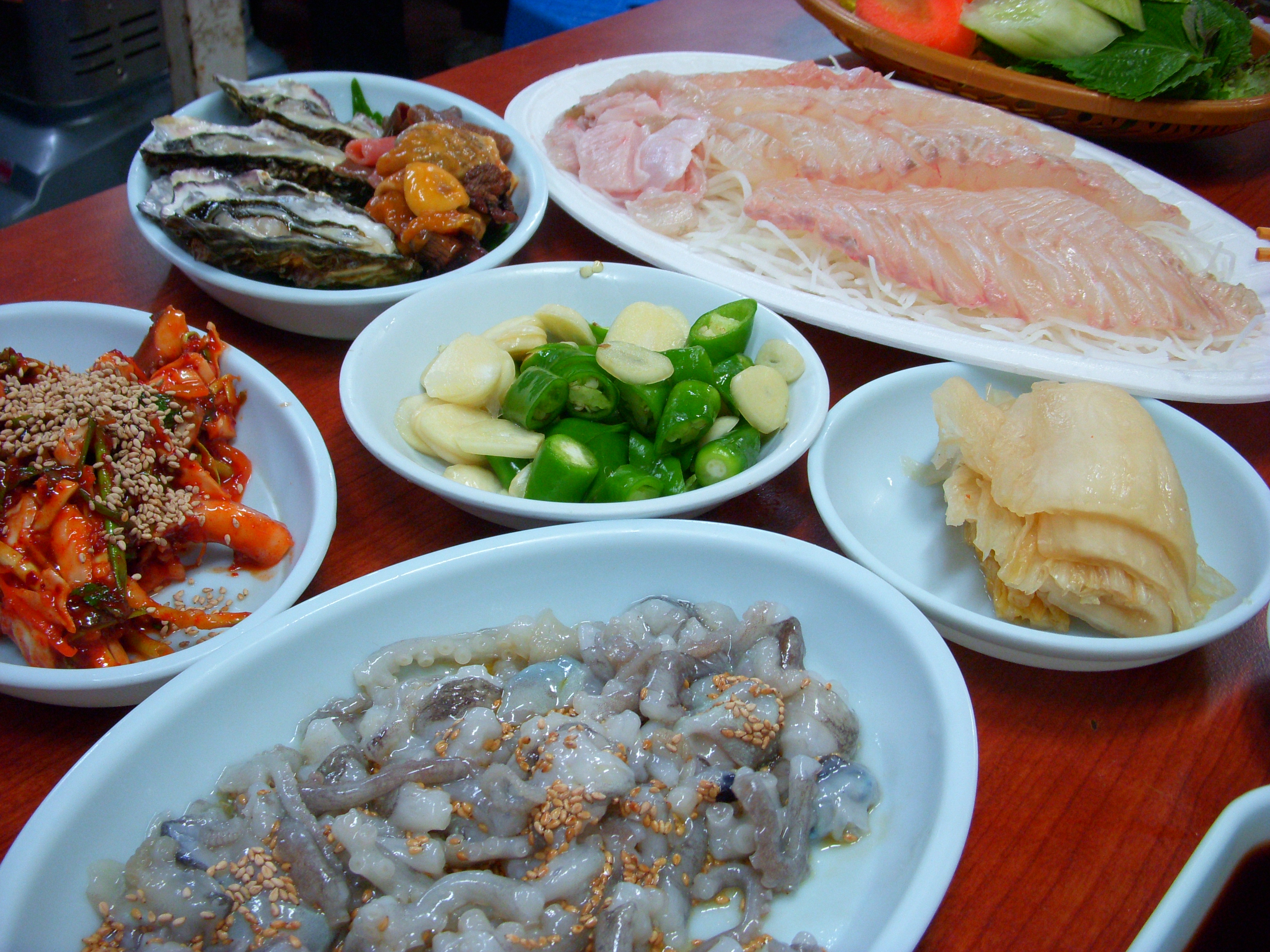
Hoe is Korean-style sliced raw fish. It is usually shared and eaten with sauces, vegetables, and side dishes. Choose it if you are comfortable with raw seafood and want a distinctly Korean seafood meal.
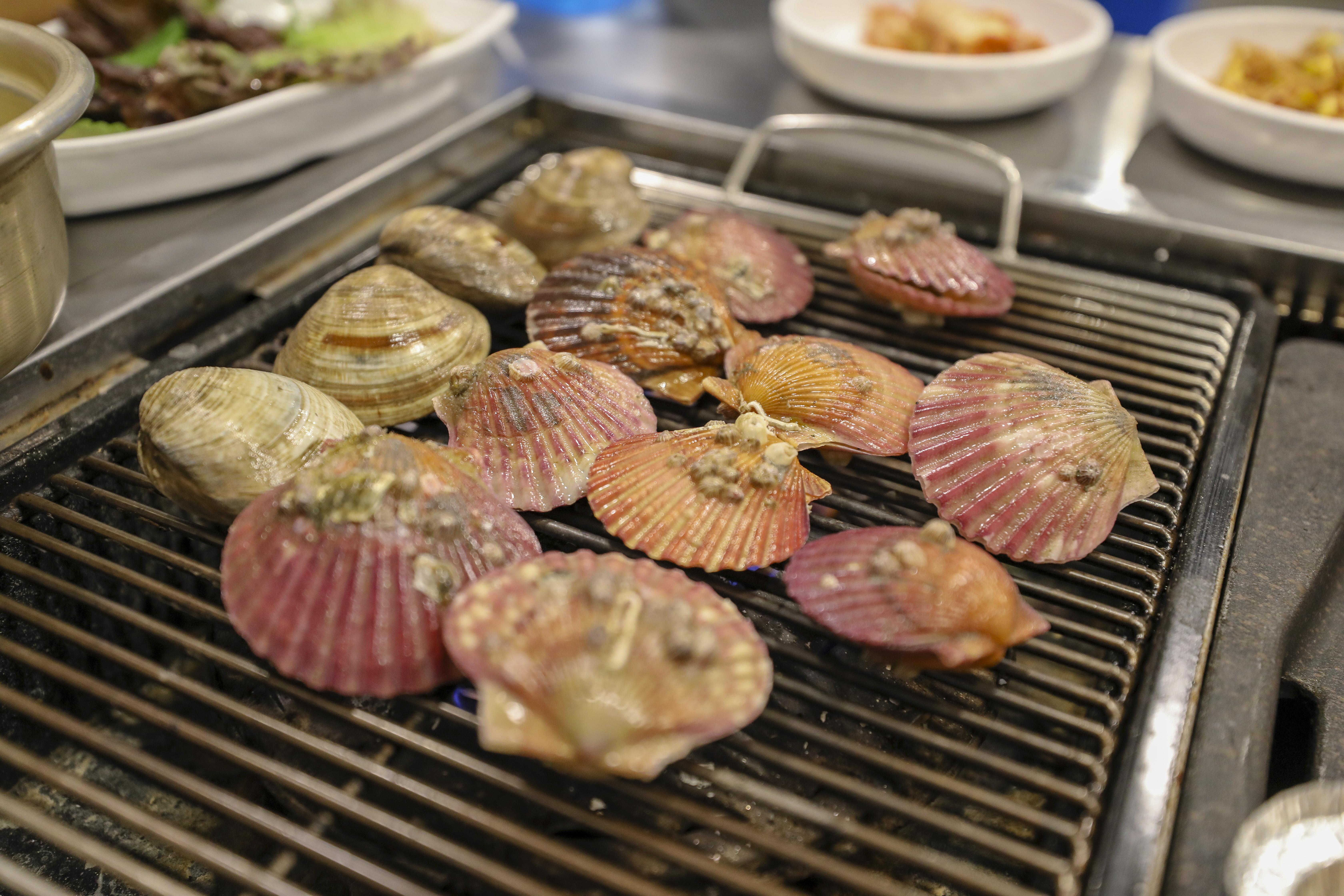
Grilled clams are more approachable for travelers who prefer cooked seafood. They are often shared and can be a good evening meal near coastal areas.
Grilled fish or cooked seafood soup can be the easiest choice for beginners. These options are better if you are unsure about raw fish, traveling alone, or want a more familiar cooked meal.
Solo Travelers and Small Groups
Seafood can be harder for solo travelers because many portions are designed for sharing. If you are alone, look for grilled fish, seafood rice bowls, smaller hoe portions, or restaurants with clear single-person menus. At a market, ask about portion size before ordering because a display price may not match the amount you imagined.
Allergies and Comfort Level
Busan seafood is not a good category for guessing. If you have a shellfish, fish, or seafood allergy, confirm ingredients before ordering. Broths, sauces, side dishes, and shared cooking surfaces can also matter. If you are not comfortable with raw seafood, say so clearly and choose grilled or cooked dishes instead.
A Practical Route by Area
Nampo route: Jagalchi Market -> BIFF Square -> Gukje Market or Bupyeong Kkangtong Market.
Gwangalli route: seafood dinner -> Gwangalli Beach -> Gwangan Bridge night view.
Haeundae route: beach or Blueline Park -> seafood restaurant -> cafe or evening beach walk.
Common Mistakes
- Ordering market seafood without confirming the total price and preparation charge.
- Assuming all Busan seafood has to be raw.
- Choosing a large shared seafood dish when eating alone.
- Forgetting to mention shellfish or seafood allergies before side dishes and sauces arrive.
- Going to Jagalchi only for a meal when you might enjoy it more as a market walk plus a simpler restaurant nearby.