Gwangjang Market Guide: What to Eat, How to Order, and How to Avoid a Messy Visit
A practical first-time guide to Gwangjang Market street food, seating, ordering, cash, crowds, and nearby Jongno routes
Visit Gwangjang Market with a clear food plan: choose a stall type, understand seating and payment, avoid peak crowd mistakes, and connect it with Jongno.
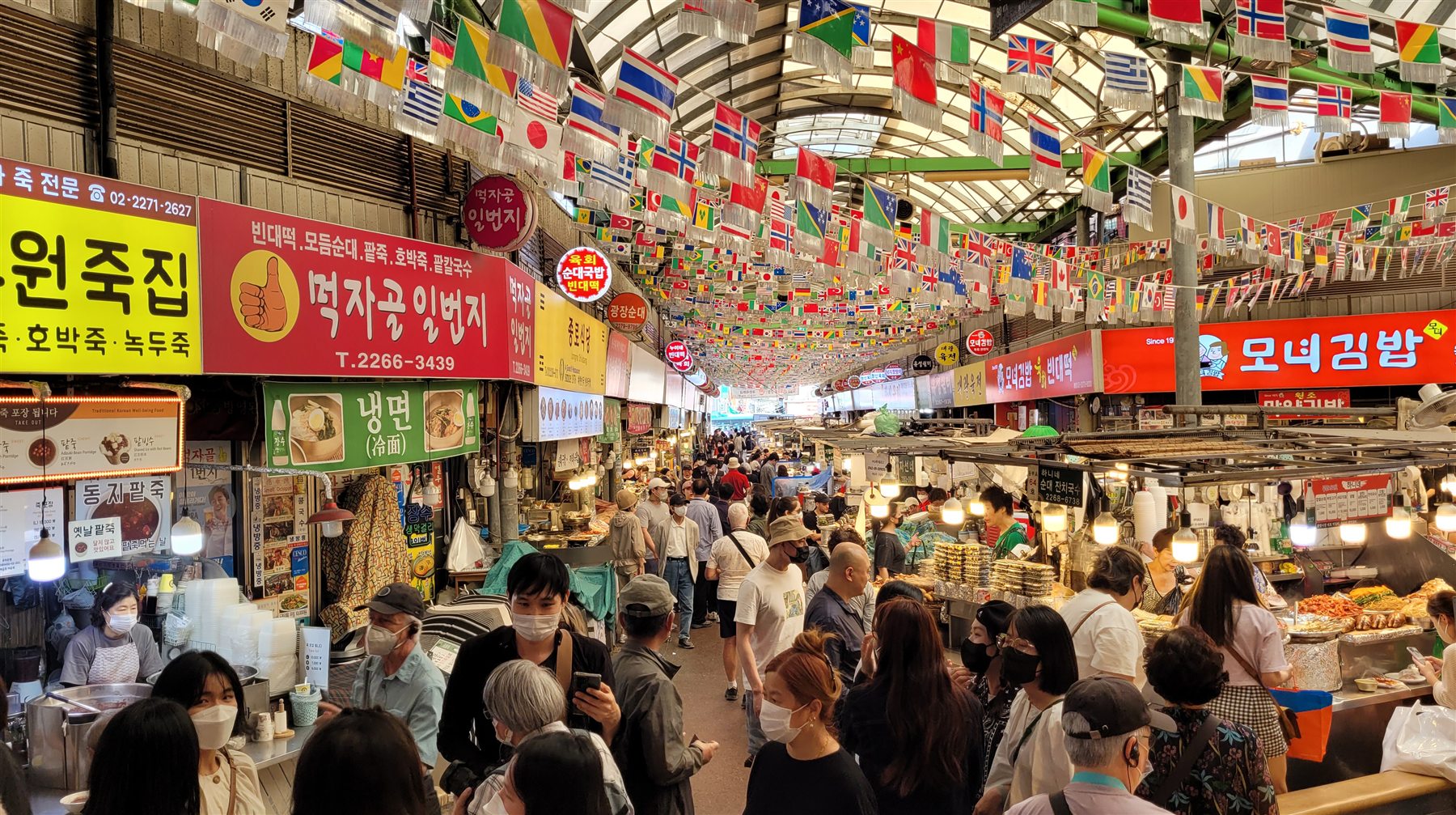
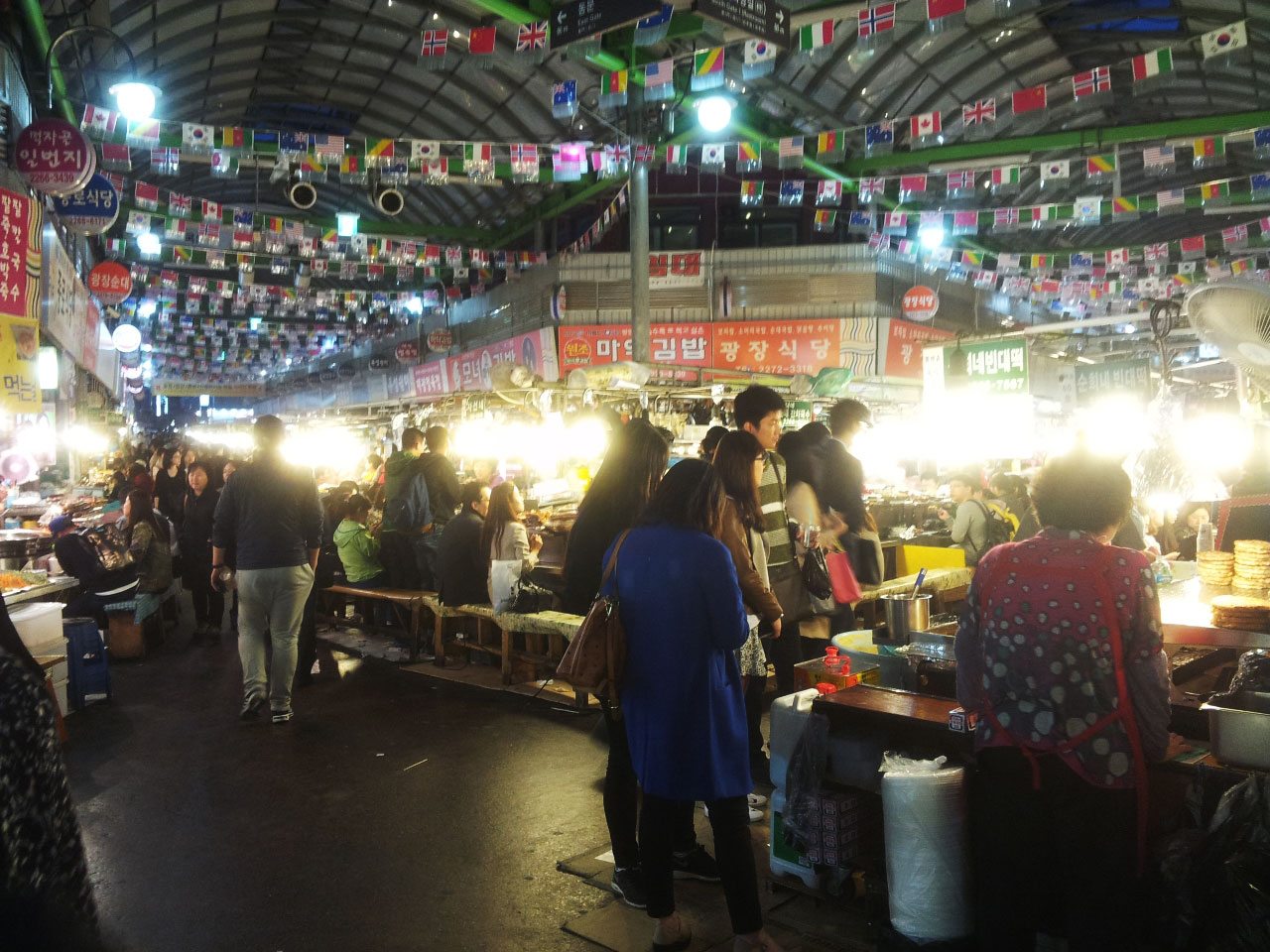
Gwangjang Market is at its best when you arrive with a small plan, not a huge appetite for everything. The market is compact, crowded, and direct: you choose a stall, sit at a counter or small table, order quickly, eat, pay, and move on. That rhythm is part of the experience, but it can feel confusing if you expect a restaurant-style meal.
Decide What Kind of Visit You Want
Quick taste: choose one or two foods such as bindaetteok, mayak gimbap, tteokbokki, or hotteok, then continue to Cheonggyecheon or Jongno.
Full meal: sit for kalguksu, bibimbap, yukhoe, or a pancake-and-makgeolli style meal. This takes longer and works better outside the tightest lunch rush.
Food crawl: share small portions with another person. Trying too many heavy dishes alone is the easiest way to overorder.
Foods That Make Sense for a First Visit
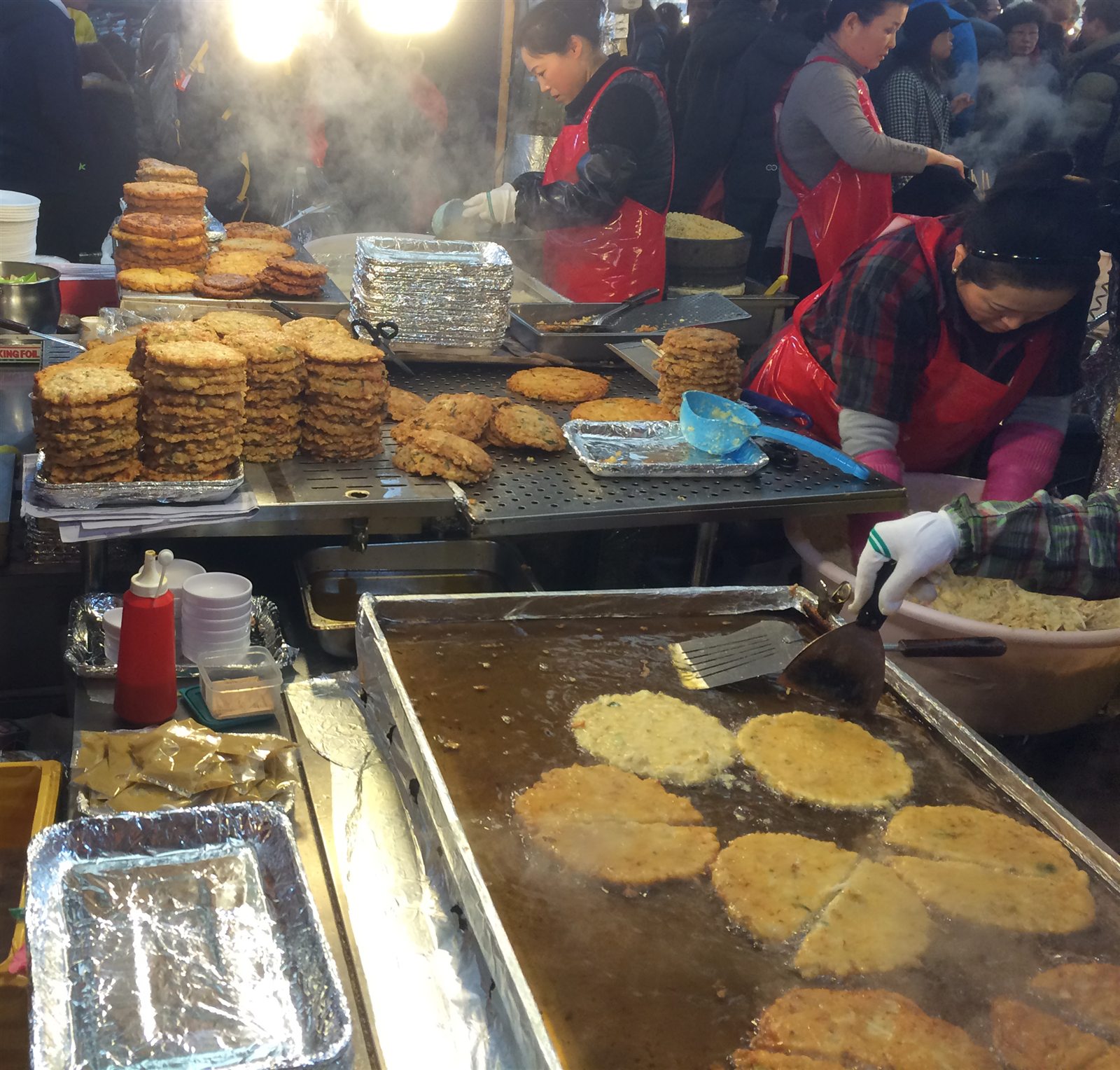
Bindaetteok is the market classic: a mung bean pancake fried until crisp. It is filling, so one order may be enough with another small dish.
Mayak gimbap is easy to share and less intimidating than raw or very spicy foods.
Tteokbokki and sundae are familiar street-food choices, but spice and texture can surprise first-time visitors.
Kalguksu is a better choice if you want a warm seated meal rather than snacks.
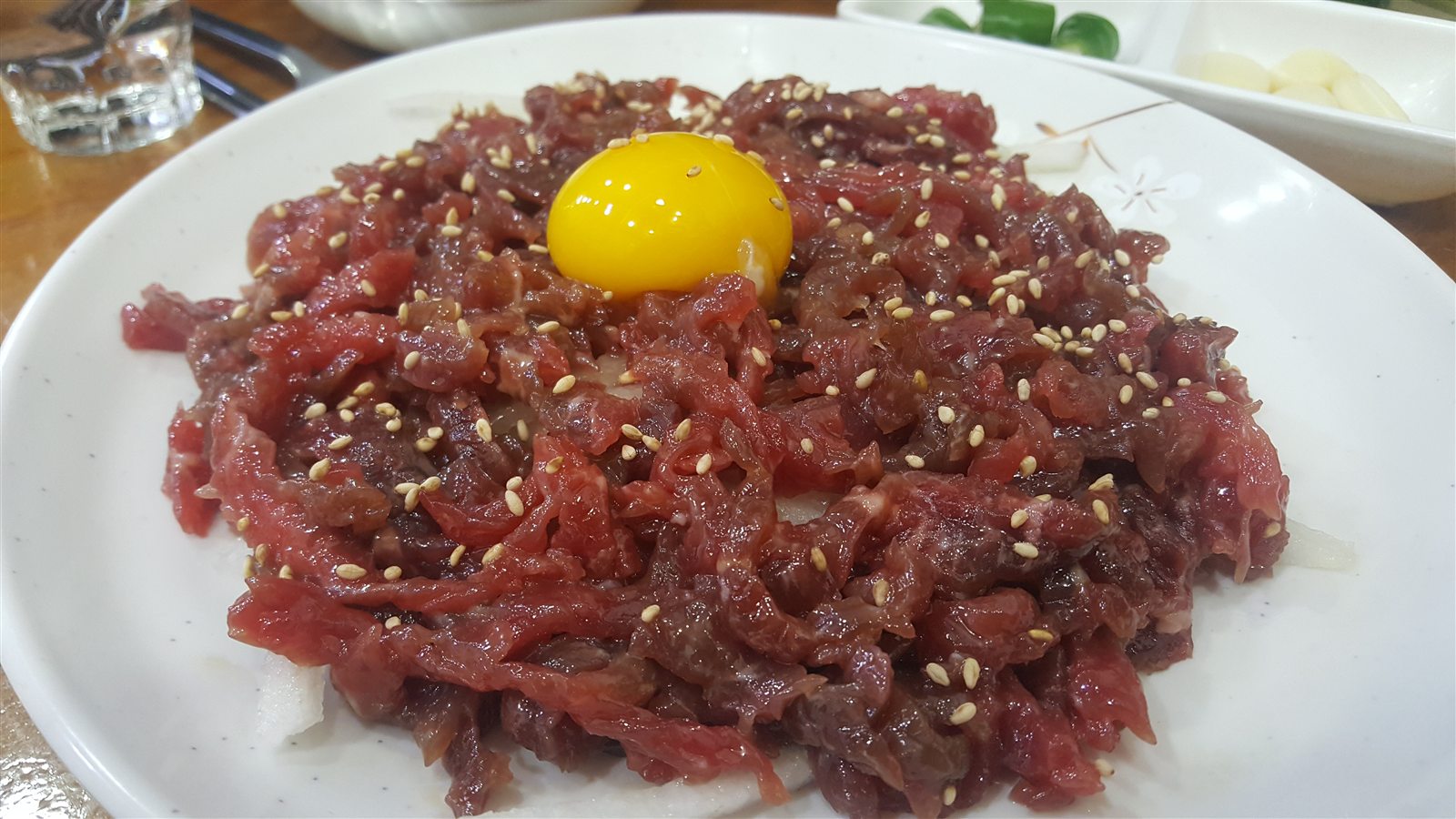
Yukhoe is famous in and around the market, but it is raw beef. Skip it if you avoid raw meat, are pregnant, immunocompromised, or unsure about food safety risk.
How Ordering Usually Works
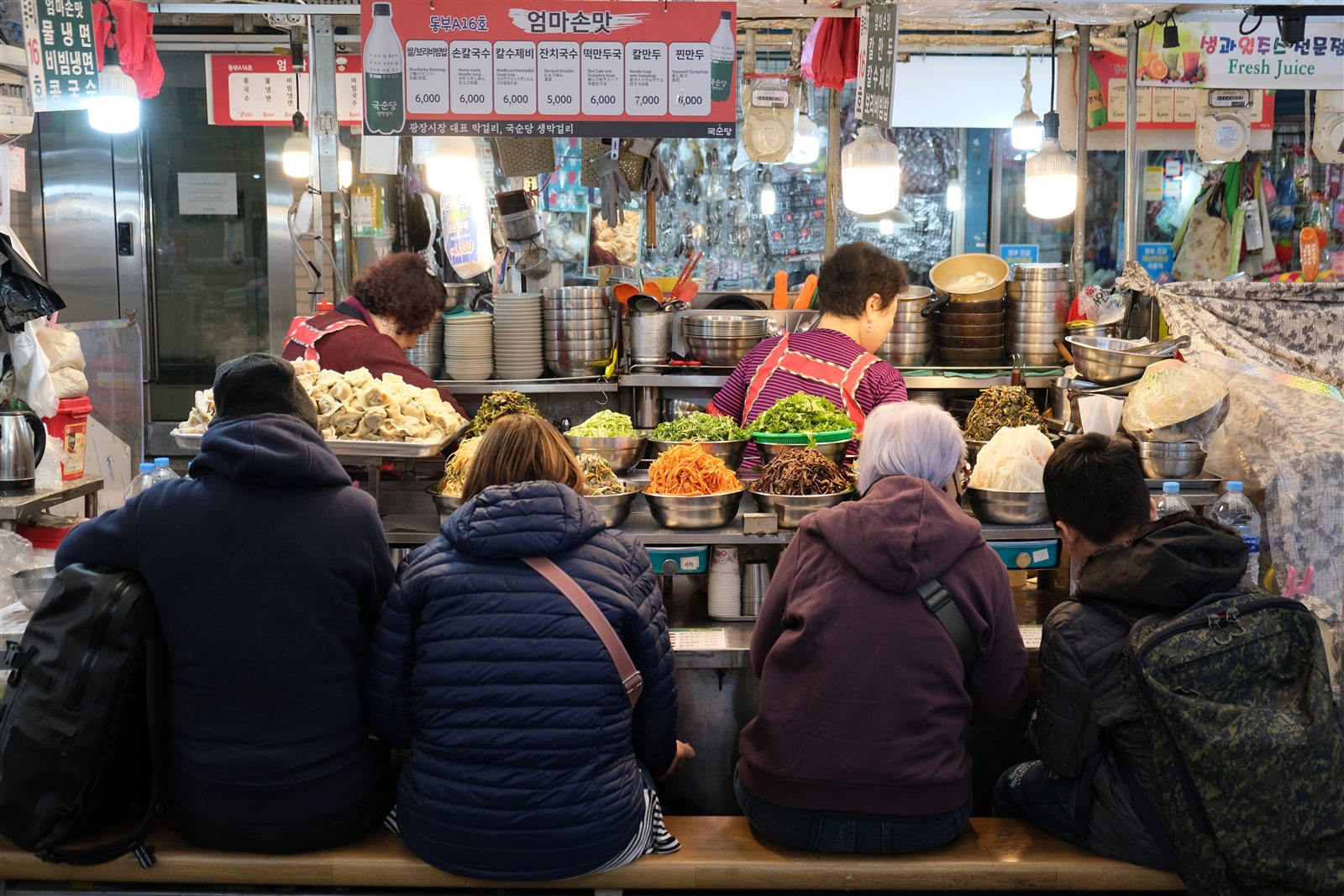
Many food stalls are built for fast turnover. Look at what people are eating, point if English is limited, confirm the portion, and ask the price before sitting if anything is unclear. Some stalls expect each seated person to order; others allow sharing. If you only want to look, do not block the counter during busy hours.
Payment and Price Reality
VisitKorea lists cards as accepted at Gwangjang Market, but small vendors and busy stalls may still be easier with cash. Bring small bills, especially if you plan to snack across several stalls. For seafood, raw beef, or larger cooked dishes, confirm the price before ordering instead of assuming every plate is a cheap street snack.
Best Timing
VisitKorea lists the food street as operating from morning to late evening, but individual stalls can vary. For a calmer first visit, avoid the center of lunch and dinner rush. Late afternoon can work well if you want market energy without trying to eat shoulder-to-shoulder.
Simple Route Pairings
Food only: Jongno 5-ga Station -> Gwangjang Market -> Jongno 5-ga Station.
Market plus walk: Gwangjang Market -> Cheonggyecheon Stream -> Euljiro or Jongno.
Culture day: Gwangjang Market -> Changdeokgung Palace or Insadong, depending on your direction and energy.
Common Mistakes
- Arriving at peak time with no idea what to order.
- Sitting before checking whether sharing is acceptable.
- Assuming every vendor handles cards smoothly.
- Ordering raw beef because it is famous without considering comfort with raw food.
- Treating the market like a quiet cafe instead of a fast, crowded food area.