Insadong and Ikseon-dong Guide: Tea, Souvenirs, Hanok Cafes, and Walking Route
Plan a practical walking route through Insadong crafts, Ssamziegil, tea houses, Ikseon-dong hanok alleys, cafes, shopping, and subway access
Connect Insadong and Ikseon-dong for tea, crafts, souvenirs, hanok cafes, dinner, and an easy route after palaces or Bukchon.
Insadong and Ikseon-dong are two of the easiest Seoul neighborhoods to explore together. They are close enough to connect on foot, but each offers a different version of the city.
Use the Two Areas Differently
Insadong is better for traditional souvenirs, tea, crafts, galleries, and a calmer daytime walk. Ikseon-dong is better for compact hanok-style cafes, restaurants, and evening atmosphere. Put them together, but do not expect the same mood from both.
Insadong is known for traditional crafts, galleries, tea houses, and souvenir shopping. Ikseon-dong is a compact maze of hanok buildings adapted into cafes, restaurants, and small shops. Together, they make a practical half-day route for travelers who want Korean culture, food, shopping, and atmospheric streets without crossing the city several times.
This Insadong and Ikseon-dong guide explains what to see, where to start, how much time to allow, and how to avoid the most common planning mistakes.
Insadong and Ikseon-dong at a Glance
Both neighborhoods are in Jongno, Seoul's historic center. You can walk between them, and the transition is part of the experience.
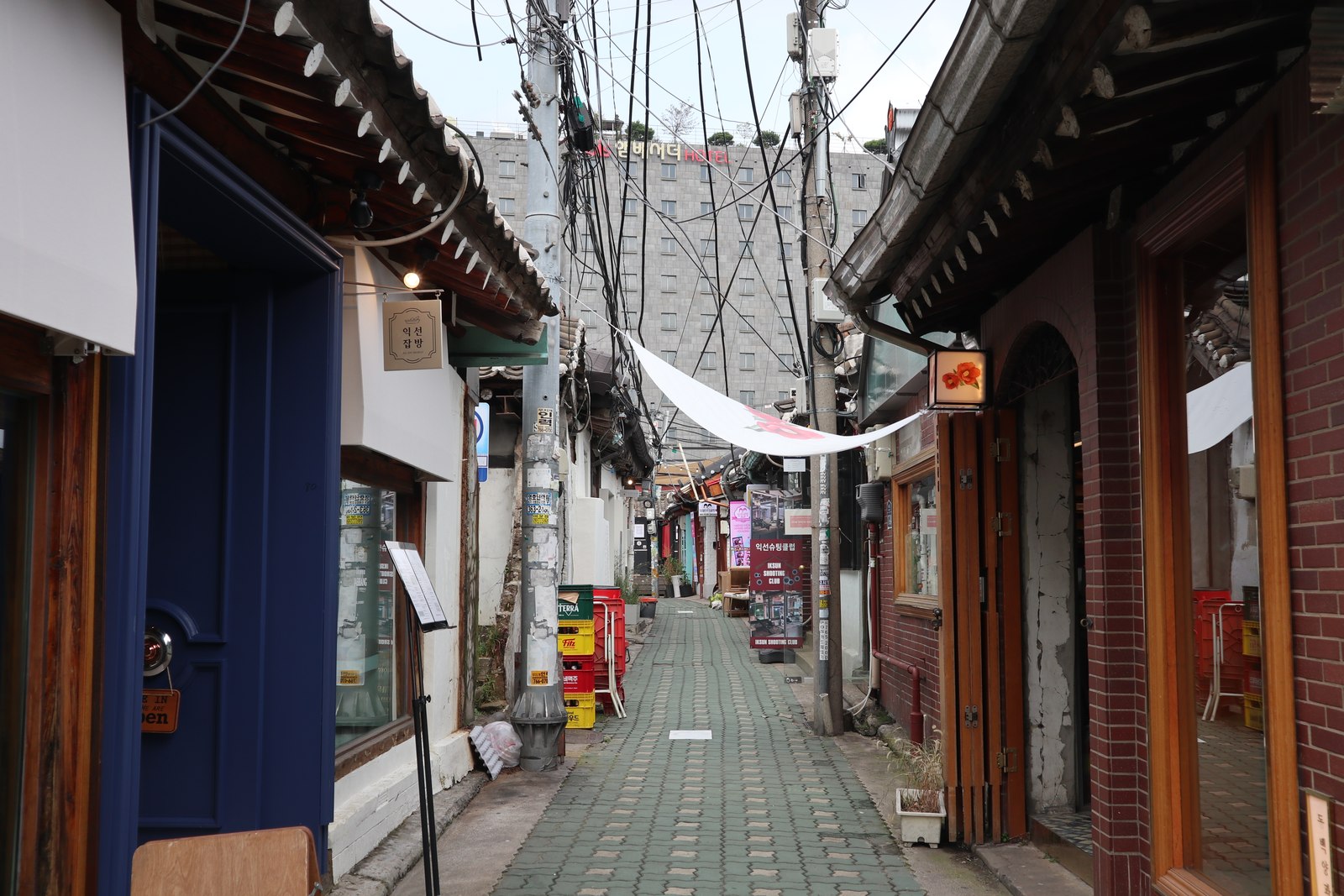
Insadong has a wider main street lined with craft shops, galleries, restaurants, and tea houses. It feels more open and is easier to navigate. Ikseon-dong is smaller and denser, with narrow lanes, renovated hanok buildings, and popular cafes and restaurants.
Choose Insadong for traditional gifts and a relaxed cultural walk. Choose Ikseon-dong for hanok architecture, cafes, dinner, and evening atmosphere. Visit both if you have at least three to four hours.
What to See in Insadong
Walk Along Insadong-gil
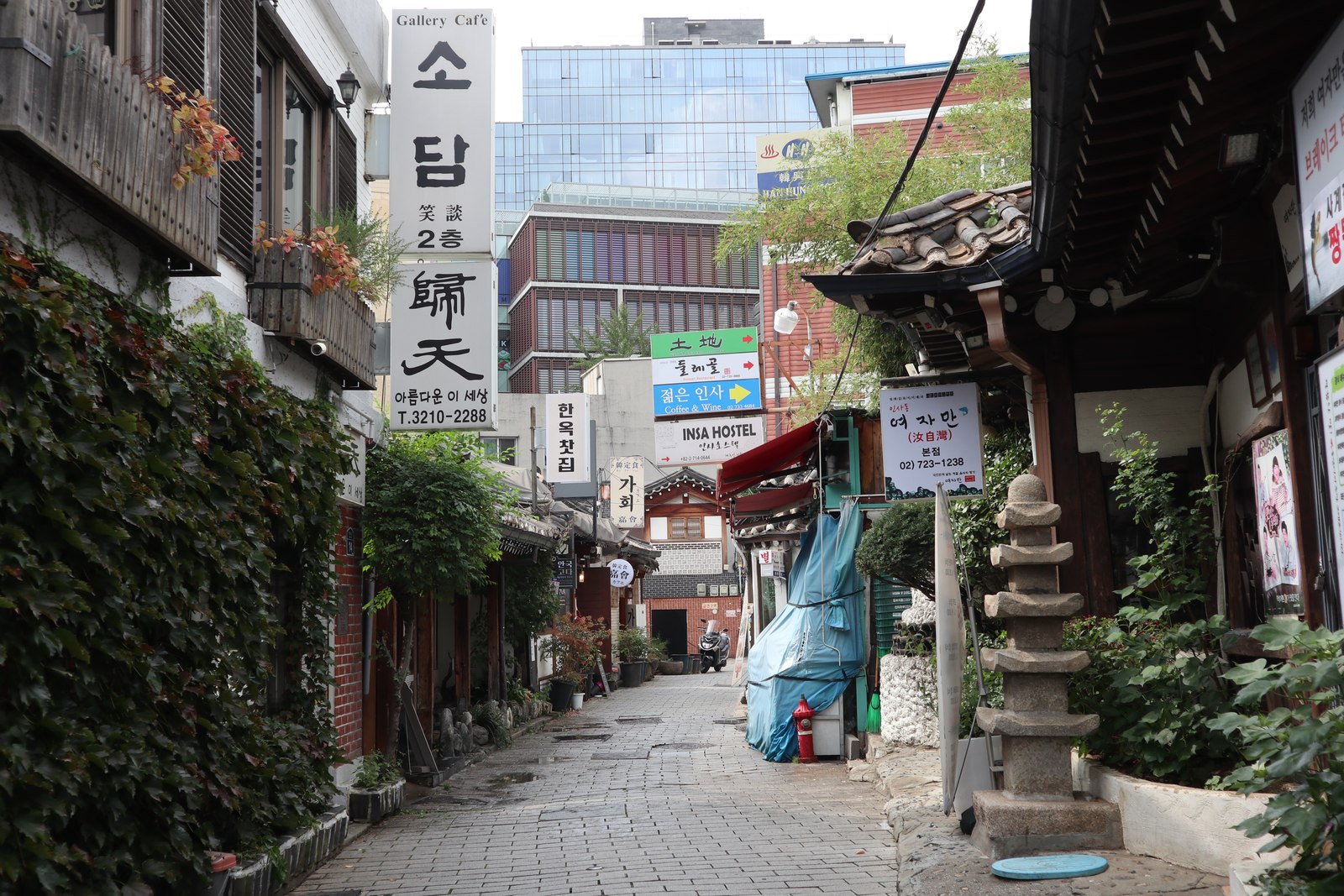
Insadong-gil is the neighborhood's main cultural street. Shops sell ceramics, calligraphy supplies, handmade crafts, stationery, textiles, art, and souvenirs. Some products are traditional, while others reinterpret Korean motifs in a modern style.
Do not buy the first souvenir you see. Prices, quality, and design vary, and browsing several shops is part of the appeal. Side streets also contain galleries, tea houses, and quieter restaurants that are easy to miss from the main road.
Street events and performances sometimes take place on weekends or during special events, but they should be treated as a bonus rather than a guaranteed attraction.
Explore Ssamziegil
Ssamziegil is one of Insadong's best-known shopping landmarks. Its walkway rises gradually around an open central courtyard, allowing visitors to browse small craft shops and design stores while moving toward the rooftop.
It is compact and easy to visit in 30 to 60 minutes, depending on whether you shop or join a craft activity. Entry to the complex is free, though individual activities and purchases cost extra.
VISITKOREA currently lists Ssamziegil's operating hours as 10:30 to 20:30, with no regular closing day. Hours and tenant stores can change, so confirm the latest information if it is an essential stop.
Stop at a Traditional Tea House
A traditional tea house offers a quieter break than a standard coffee shop. Common choices include yuja tea, omija tea, ginger tea, jujube tea, and green tea. Some tea houses also serve rice cakes, yakgwa, or other Korean sweets.
Menus and sweetness levels vary. Fruit and herbal teas can be much sweeter than first-time visitors expect, so ask whether sweetness can be adjusted if that matters to you.
Tea houses are especially useful in winter, on rainy days, or after a long palace visit. Look beyond the main street if you prefer a calmer setting.
Shop for Korean Souvenirs
Insadong is one of Seoul's most convenient areas for traditional-style gifts. Useful options include small ceramics, fabric goods, bookmarks, stationery, art prints, tea, mother-of-pearl-inspired accessories, and modern products using Korean patterns.
Fragile ceramics need careful packing. If you are flying with only a carry-on, choose small, flat, or soft items that are easier to transport.
What to Do in Ikseon-dong
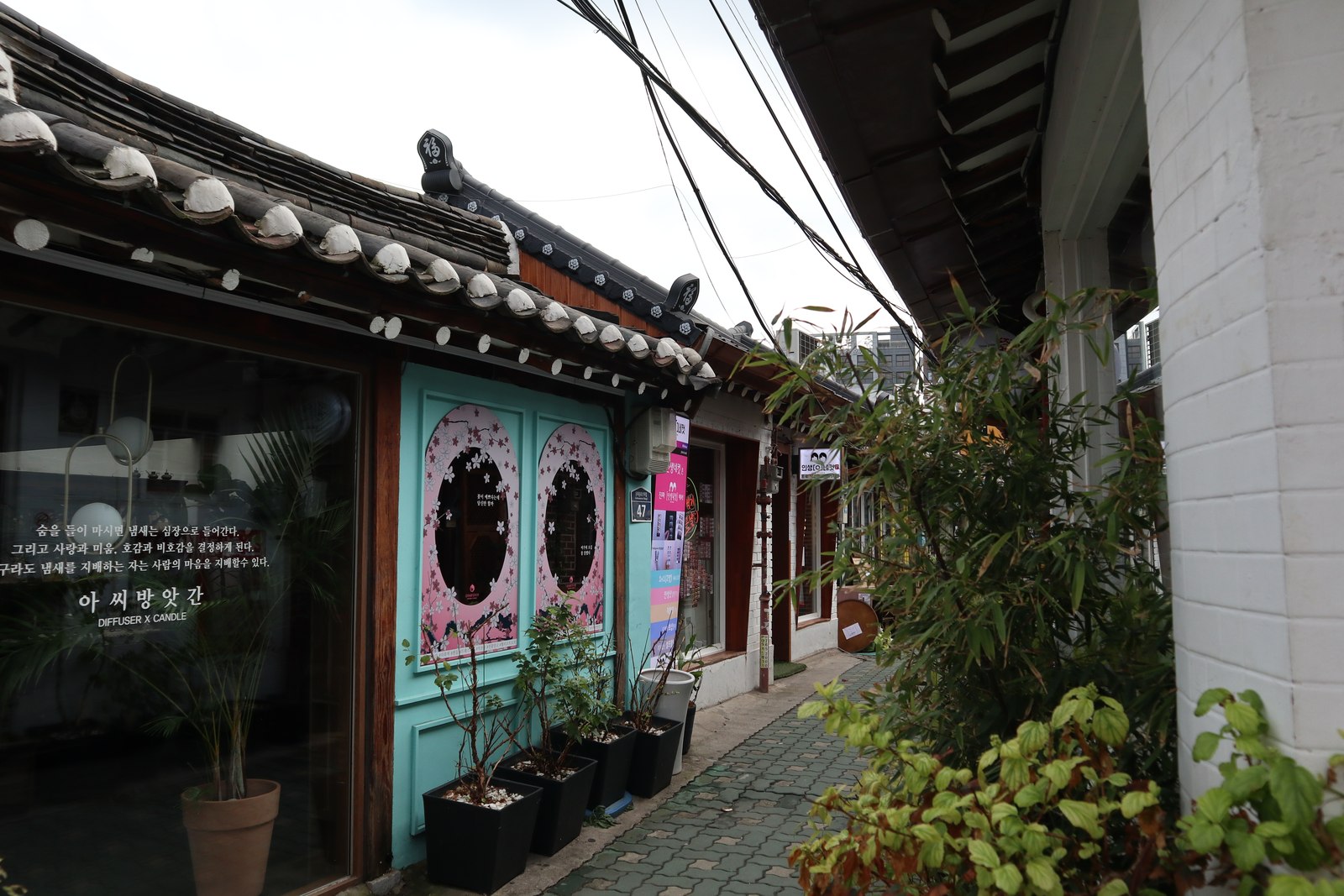
Ikseon-dong Hanok Village is a small network of narrow alleys filled with renovated hanok buildings. Cafes, bakeries, restaurants, boutiques, and photo-friendly storefronts sit close together.
The neighborhood is more compact than social media photos may suggest. You do not need several hours just to walk the lanes, but queues for popular cafes and restaurants can extend the visit.
Wander Through the Hanok Alleys
The best way to see Ikseon-dong is to walk slowly and explore without trying to follow every turn perfectly. The alleys form a small maze, but the area is bounded by larger roads and is difficult to become seriously lost in.
The lanes can become crowded, particularly on weekends and in the evening. Avoid bringing a large suitcase if possible. Uneven surfaces, narrow passages, and limited space can make rolling luggage inconvenient for you and everyone around you.
Choose a Cafe or Dessert Stop
Ikseon-dong has many visually distinctive cafes, but the most famous option is not always the best fit. Check the menu, seating, wait, and price before joining a line.
Some venues occupy old buildings with steps, narrow entrances, low ceilings, or limited seating. Accessibility varies considerably. Travelers who need step-free access should check the venue directly before visiting.
Stay for Dinner or Evening Atmosphere
Ikseon-dong works well as the final stop of the route because restaurants and cafes become lively later in the day. The hanok lanes also feel different after lights come on.
Individual businesses have their own operating hours and closing days. The neighborhood itself does not have one universal opening time, so confirm any must-visit restaurant or cafe separately.
Take Photos Without Blocking the Lane
Ikseon-dong is photogenic, but its alleys are functioning pedestrian routes used by visitors, staff, delivery workers, and local residents. Step to the side, avoid blocking entrances, and do not stage long photo sessions in the center of a narrow lane.
How to Combine Both Neighborhoods
The most efficient route is one-way:
Anguk Station -> Insadong-gil -> Ssamziegil -> traditional tea house -> Ikseon-dong -> Jongno 3-ga Station
This avoids returning to your starting point and gives the day a natural progression from cultural shopping to cafes or dinner.
Allow about three to four hours for an unhurried visit. Add more time if you plan to shop seriously, wait for a popular cafe, have a full meal, or join a craft activity.
If you also want to visit Bukchon Hanok Village or Changdeokgung Palace, plan closer to a full day. Palaces involve more walking and fixed admission hours, while Bukchon requires extra time and respectful residential-area behavior.
Anguk Station or Jongno 3-ga Station?
Start at Anguk Station
Anguk Station on Seoul Subway Line 3 is the most convenient starting point for Insadong. It is also useful if your morning includes Bukchon Hanok Village or Changdeokgung Palace.
From the station, check Naver Map or KakaoMap for the most convenient exit for your first stop. Exit access can change temporarily during construction.
Finish at Jongno 3-ga Station
Jongno 3-ga Station connects Lines 1, 3, and 5 and is the closest major subway station to Ikseon-dong. Official Seoul tourism information commonly directs visitors toward the area from Exit 4 or Exit 6, depending on the side of the neighborhood and current route.
The station is large, so confirm the correct line and direction before entering. It is also convenient for continuing toward Euljiro, Dongdaemun, or other parts of central Seoul.
Recommended Half-Day Itinerary
Early Afternoon: Insadong
Arrive at Anguk Station and walk toward Insadong-gil. Browse the main street and side lanes, then spend 30 to 60 minutes at Ssamziegil.
Mid-Afternoon: Tea and Shopping
Choose a traditional tea house for a break. Finish souvenir shopping before moving on, since Insadong offers a wider selection of traditional-style gifts than Ikseon-dong.
Late Afternoon: Walk to Ikseon-dong
Continue southeast toward Ikseon-dong. The walk between the neighborhoods is short, but use a map app because the entrance to the hanok lanes can be easy to miss from a larger road.
Evening: Cafe or Dinner
Explore the alleys, choose one cafe or dessert shop, and stay for dinner if the area suits your plans. Leave through Jongno 3-ga Station.
Best Time to Visit
Weekday mornings and early afternoons are generally calmer. However, some shops and cafes may not open early, so late morning or early afternoon offers a better balance.
Weekends and public holidays are much busier. Ikseon-dong's narrow alleys can feel especially crowded, and popular restaurants may use waiting lists.
Late afternoon into early evening is a good choice if you want daytime shopping in Insadong followed by dinner and illuminated hanok streets in Ikseon-dong.
Rain does not make the route impossible because many stops are indoors, but the walking portions and narrow lanes are less comfortable in heavy rain. Summer heat and winter cold also make a tea or cafe stop more important.
Who Will Enjoy This Route?
This route is a strong choice for travelers interested in:
- Traditional crafts and practical souvenir shopping
- Hanok architecture without a long trip outside central Seoul
- Tea, cafes, desserts, and casual dining
- Street photography and slow neighborhood walks
- Combining historic and modern Seoul in one afternoon
It may be less suitable for travelers who dislike crowds, need consistently step-free venues, or want a major landmark-focused itinerary. In that case, visit Insadong on a weekday and treat Ikseon-dong as optional.
Common First-Time Mistakes
- Assuming Insadong and Ikseon-dong are far apart
- Expecting Ikseon-dong to be a large village rather than a compact set of lanes
- Bringing large luggage into crowded hanok alleys
- Building the day around one viral cafe without checking its current hours
- Underestimating weekend queues
- Blocking narrow lanes while taking photos
- Adding Bukchon and a palace without allowing a full day
- Returning to the starting station instead of using a one-way route
Before You Go Checklist
- Install Naver Map or KakaoMap
- Wear comfortable shoes
- Check current hours for essential shops, tea houses, and restaurants
- Avoid large luggage
- Allow extra time on weekends
- Decide whether the route will end with a cafe or dinner
- Plan a full day if adding Bukchon or Changdeokgung Palace
FAQ
Can I visit Insadong and Ikseon-dong on the same day?
Yes. They are close enough to connect on foot. Three to four hours is comfortable for the main streets, Ssamziegil, a tea or cafe stop, and casual browsing.
Which neighborhood should I visit first?
Start in Insadong from Anguk Station, then walk to Ikseon-dong and finish at Jongno 3-ga Station. This creates a simple one-way route.
Is Ikseon-dong free to visit?
Yes. Walking through the neighborhood is free. You only pay for food, drinks, shopping, or other activities.
Is the route suitable with a suitcase?
A small bag is manageable, but a large rolling suitcase is inconvenient in Ikseon-dong's narrow and crowded lanes. Use hotel or station luggage storage when possible.
Is Insadong or Ikseon-dong better at night?
Insadong is better for daytime shopping because many cultural shops close in the evening. Ikseon-dong is often livelier for cafes, restaurants, and evening atmosphere.