Seoul Bus Guide: How to Ride, Pay, Transfer, and Get Off
A first-time visitor's guide to finding the right stop, tapping your card, requesting a stop, and transferring correctly
Ride Seoul buses confidently with practical guidance on route direction, transportation cards, stop buttons, exit taps, transfer rules, fares, and night routes.
Seoul's subway is fast, but a bus can often take you closer to a palace gate, hillside neighborhood, market, park, or accommodation. It also lets you see the city rather than traveling beneath it.
The system becomes manageable once you learn four actions: find the correct direction in Naver Map or KakaoMap, tap your transportation card when boarding, press the stop button before your destination, and tap again when leaving.
Do not rely on bus color alone. The route number, stop location, and direction shown in your navigation app are much more useful.
When Is a Bus Better Than the Subway?
A bus is especially useful when:
- Your destination is far from a subway station.
- You are traveling to a hill, residential neighborhood, or riverside park.
- A direct bus avoids a long subway transfer.
- You want to see Seoul's streets and neighborhoods during the journey.
- You need a night bus after regular subway service has ended.
Areas around Bukchon, Seochon, Namsan, and several Han River parks often become easier to reach when buses are included in the route.
Choose a Transportation Card Before Boarding
T-money
T-money is the simplest choice for many visitors. It works on buses and subways in Seoul and is widely accepted in other Korean cities.
You can buy or top up the card at many convenience stores and subway stations. Some top-up locations still require cash, so keep a small amount of Korean won available.
Climate Card
A short-term Climate Card can be useful when you stay mainly in Seoul and expect to use public transportation many times each day.
Coverage is not identical to T-money. Some services outside Seoul, metropolitan express buses, and specific railway sections may not be included. Check your planned routes before choosing it.
A simple rule is:
- Traveling in Seoul and other cities: use T-money.
- Taking many journeys inside covered Seoul services: compare a short-term Climate Card.
Direct payment with overseas bank cards is being introduced gradually. Do not assume every bus already accepts a foreign credit card at the reader; carry a Korean transportation card.
Find the Correct Bus and Direction
Naver Map and KakaoMap generally provide more useful local transit information than Google Maps in Korea.
A route result normally shows:
- The bus number
- The boarding stop
- The direction or final destination
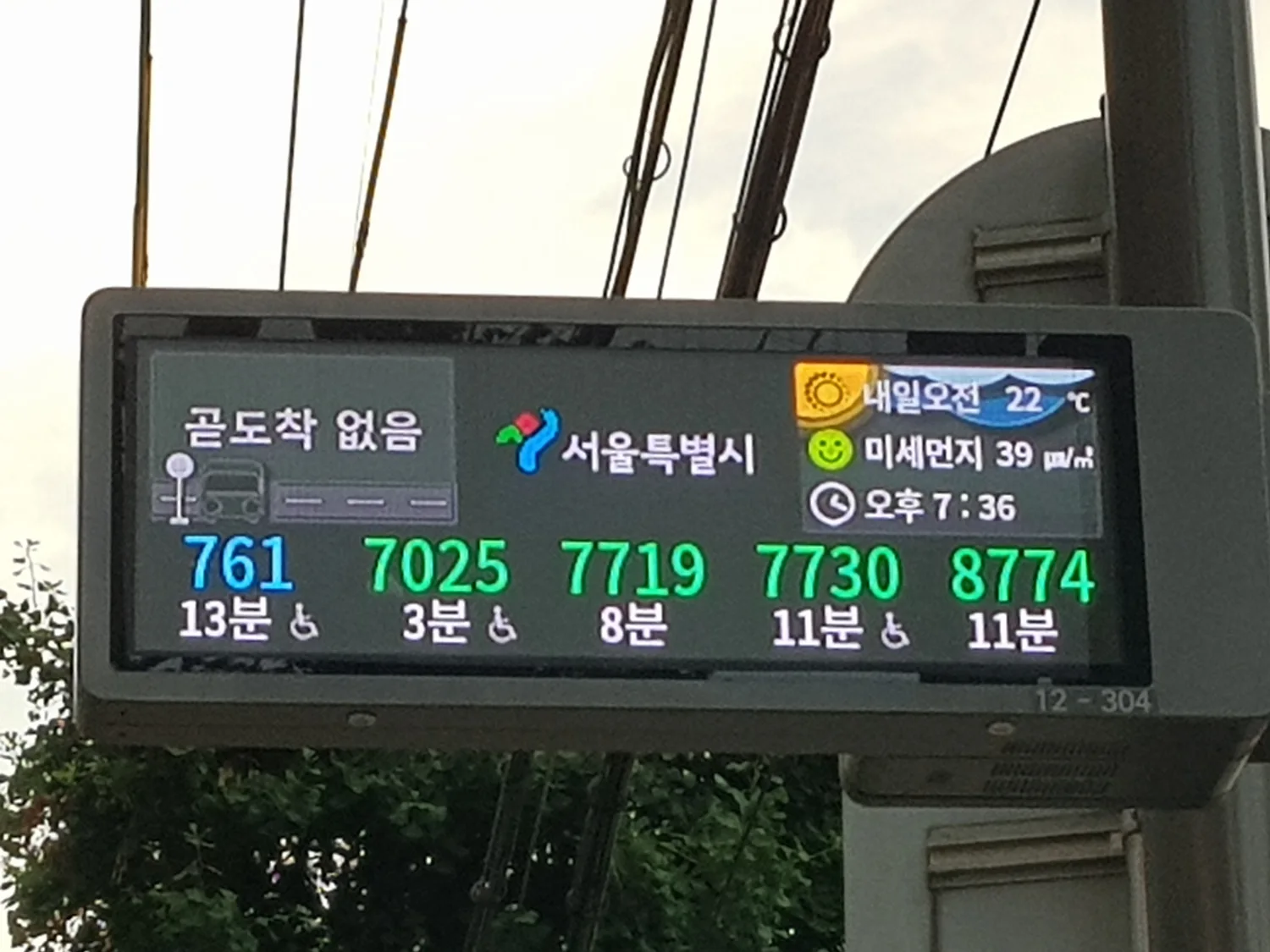
- Estimated arrival time
- The number of stops
- Your exit stop
- The final walk to your destination
Checking only the bus number is not enough. The same route travels in two directions, often from stops on opposite sides of the road.
Similar Stop Names Can Mean Different Locations
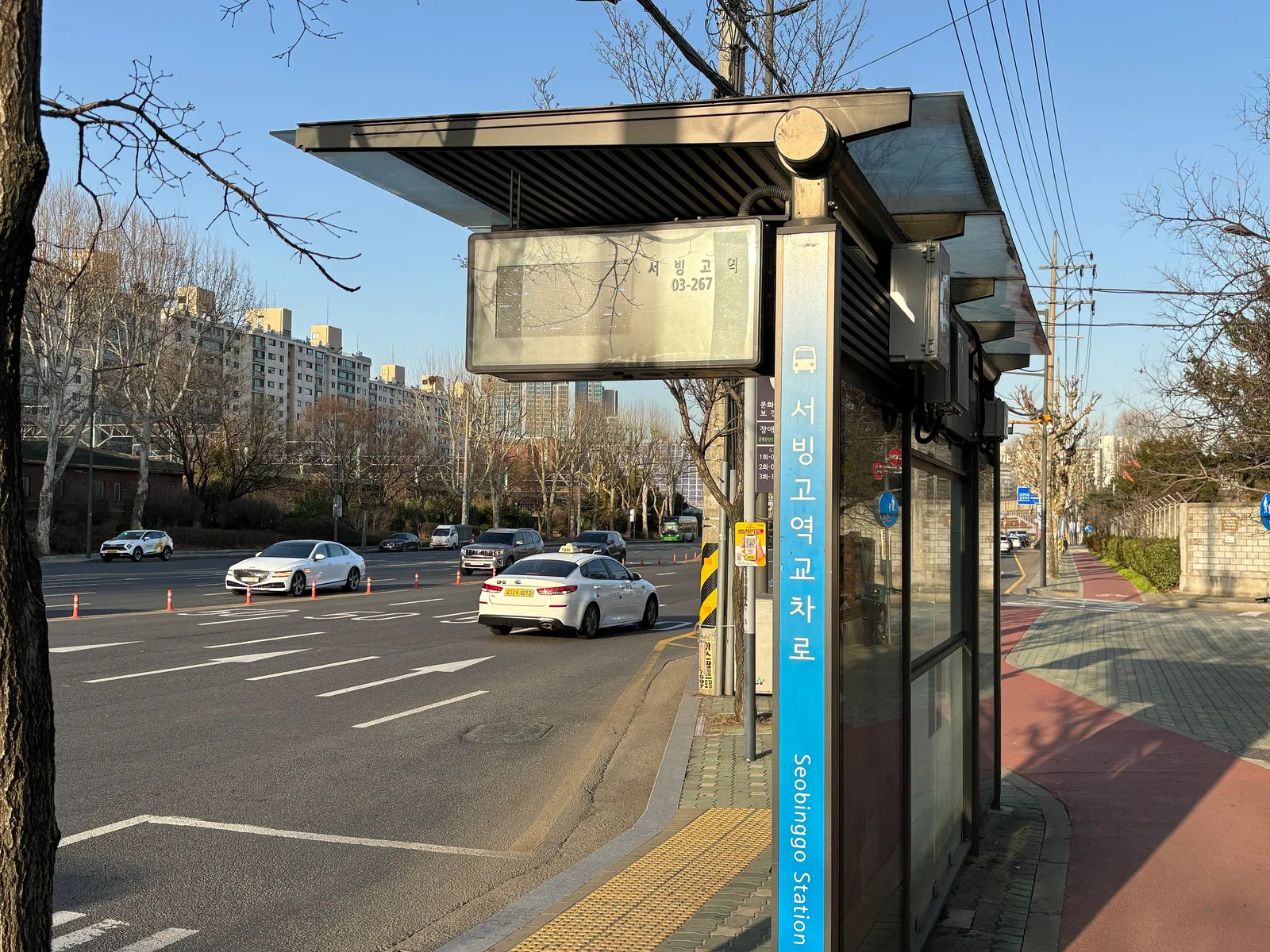
A large junction or transfer center may have several stops with similar names. One may be beside the road, another in a central bus lane, and another around the corner.
Before waiting, compare:
- The stop identification number
- The exact position shown in the app
- Whether it is in a center lane or beside the sidewalk
- The list of bus numbers on the stop sign
- The route direction
Center-lane stops may require a crosswalk or underground passage. Give yourself enough time to reach the correct platform before the bus arrives.
How to Board a Seoul Bus
- Wait near the front-door boarding area.
- Confirm the route number as the bus approaches.
- Board through the front door.
- Tap your transportation card once on the reader.
- Listen for the confirmation sound and check the display.
- Take a seat or hold a rail immediately.
Several buses may enter a stop at the same time. Watch for your route and move toward it only after the vehicle has stopped safely.
Do not hold a wallet containing several contactless cards against the reader. The machine may detect the wrong card or return an error.
Buses can accelerate and brake quickly. Hold a rail before the vehicle begins moving.
Press the Stop Button Before Your Destination
Stop buttons are located near windows, doors, and handrails. Follow your journey in the navigation app or listen to the onboard announcement.
When your stop is shown as the next stop:
- Press the stop button.
- Check that its light or the stop-request display activates.
- Keep holding a rail until the bus stops.
- Move toward the rear exit when it is safe.
If another passenger has already pressed the button, you do not need to press it again.
Tap Your Card Again When Leaving
Most passengers leave through the rear door. Tap the same transportation card on the exit reader before stepping off.
The exit tap matters even when you are not planning an immediate transfer. Seoul's integrated fare system uses boarding and exit records to calculate distance and transfer eligibility.
If you do not tap out:
- Your next transfer discount may not apply.
- An incomplete fare or additional charge may appear later.
- The system cannot correctly close the journey distance.
How Transfer Discounts Work
You need a transportation card to receive integrated transfer discounts between eligible buses and subways.
The general Seoul rules are:
- Tap out when leaving each bus or subway journey.
- Board the next eligible service within 30 minutes.
- Between 9:00 p.m. and 7:00 a.m., the transfer window is extended to 60 minutes.
- Up to four transfers, or five total boardings, may be recognized.
- Reboarding the same bus route normally does not count as a discounted transfer.
- One card per traveler is the simplest arrangement.
A transfer is not necessarily completely free. Additional distance charges or a fare difference can apply when the complete journey exceeds the base distance or includes a more expensive service.
For eligible metropolitan travel, adult distance charges may increase by KRW 100 for each additional five kilometers after the initial ten kilometers. Express and regional bus services can use different base distances and fares.
Current Seoul Bus Fares
Adult transportation-card fares checked in June 2026 include:
- Trunk and branch city buses: KRW 1,500
- Village buses: KRW 1,200
- Metropolitan express buses: KRW 3,000
- Night buses: KRW 2,500
Youth and child discounts may require an eligible, correctly registered transportation card. Fares can change, and buses operated by Gyeonggi Province or Incheon may use different pricing.
Bus Colors Are Only a General Clue
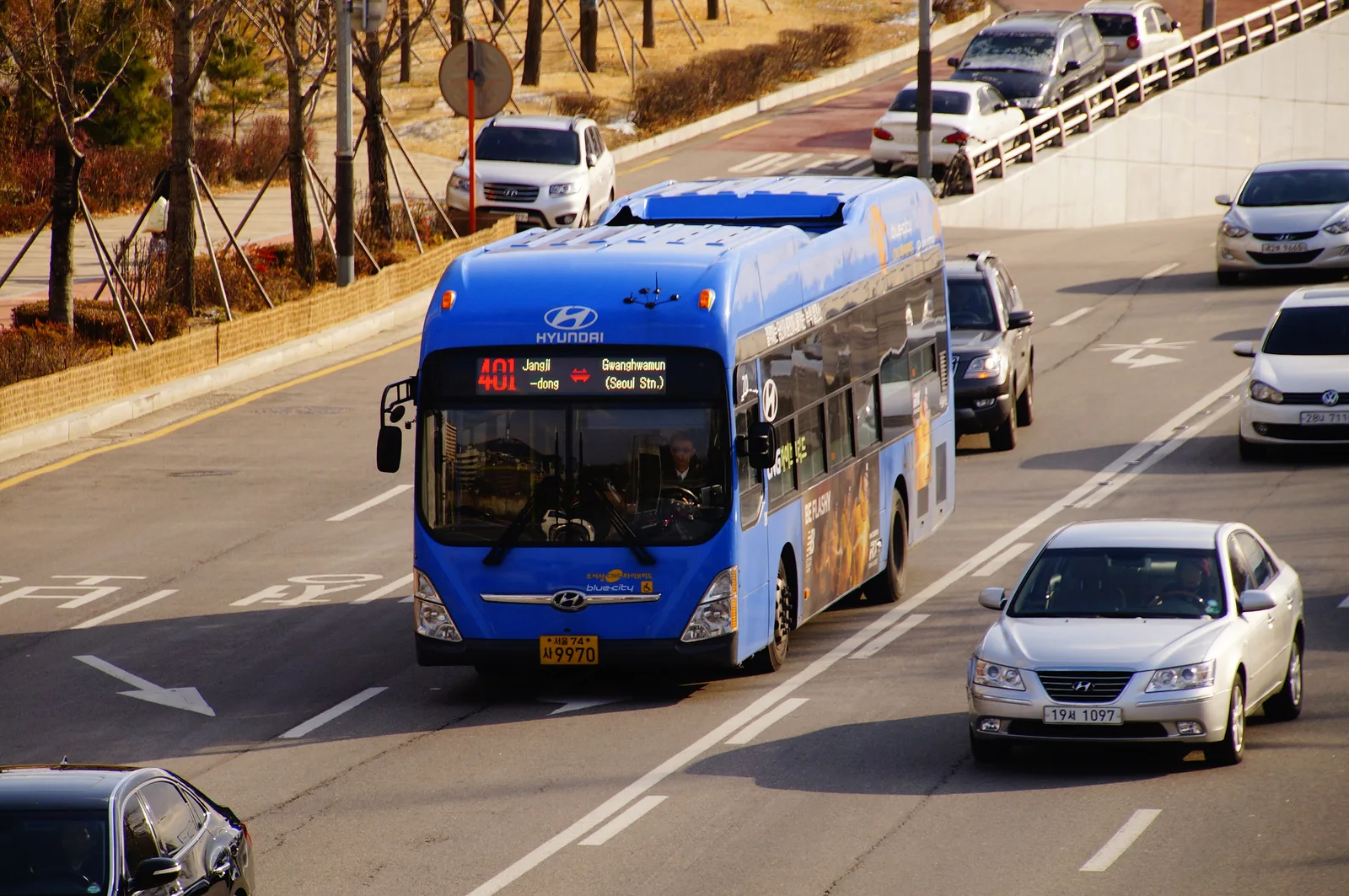
Seoul buses are commonly described by color:
- Blue: trunk routes connecting major districts
- Green: branch or local routes connecting neighborhoods and subway stations
- Red: metropolitan express routes between Seoul and surrounding areas
- Yellow: selected circular routes
Special liveries, local buses, and vehicles from neighboring municipalities can make color classification less obvious. Treat the color as a clue, not a navigation method. Follow the route number in your app.
Prepare a Card Instead of Relying on Cash
Many Seoul routes operate as cashless buses, and the city maintains a current list of participating services.
Before boarding:
- Check that your transportation card has enough balance.
- Top it up at a convenience store or subway station when necessary.
- Do not assume the driver can accept a large banknote.
- Do not assume a foreign contactless bank card will work on every bus.
Can Several People Use One Card?
A bus driver may be able to charge several passengers to one card when you clearly state the number of travelers before tapping.
This is not the easiest method for visitors because:
- The same group must board, leave, and transfer together.
- You may need to state the passenger count again during a transfer.
- Multi-passenger bus payment does not simplify subway transfers.
- The process becomes confusing when the group separates.
Give each person a separate transportation card whenever possible.
Using Seoul's Night Buses
Seoul's night routes begin with the letter N and are commonly called N buses or Owl Buses.
As of March 2026, Seoul reported 14 night routes, generally operating between approximately 11:00 p.m. and 6:00 a.m. The adult transportation-card fare is KRW 2,500.
Exact schedules and intervals vary. Night buses can be less frequent than daytime services, so check live arrival information and avoid planning around the final bus with no backup.
Before a late journey:
- Confirm the stop and direction.
- Check the route's actual first and final departure.
- Keep enough phone battery and card balance.
- Consider a taxi if the wait or final walk feels impractical.
What to Do If You Board the Wrong Bus
Press the stop button and leave at the next safe stop. Tap your card when exiting, then search again from your current location.
Boarding the same route in the opposite direction may not receive a transfer discount. Late at night, check the remaining operating time before deciding whether to reverse the route or use a taxi.
Do not move suddenly toward the driver while the vehicle is in motion. Wait until the bus has stopped if you need brief assistance.
Common Mistakes to Avoid
- Boarding the correct route number in the wrong direction
- Waiting at a similarly named stop in the wrong position
- Pressing the stop button after the bus has already passed the approach point
- Forgetting to tap when leaving
- Depending on cash for a cashless route
- Assuming every foreign contactless card works directly
- Using bus color instead of the route number
- Holding several transportation cards against the reader together
- Trying to manage a complicated group transfer with one card
An Easy First Bus Journey
Make your first attempt simple. Choose:
- A direct journey with no transfer
- Fewer than ten stops
- A stop beside a major road
- A daytime route
- A journey with live location information in Naver Map or KakaoMap
After one or two trips, tapping in, pressing the button, and tapping out will feel routine. Seoul buses then become one of the best ways to fill the gaps between subway stations and experience more of the city above ground.
Information verified June 25, 2026. Fares, routes, cashless-bus coverage, Climate Card coverage, night schedules, and foreign-card payment availability can change. Check Seoul's official transport pages and live route information before travel.
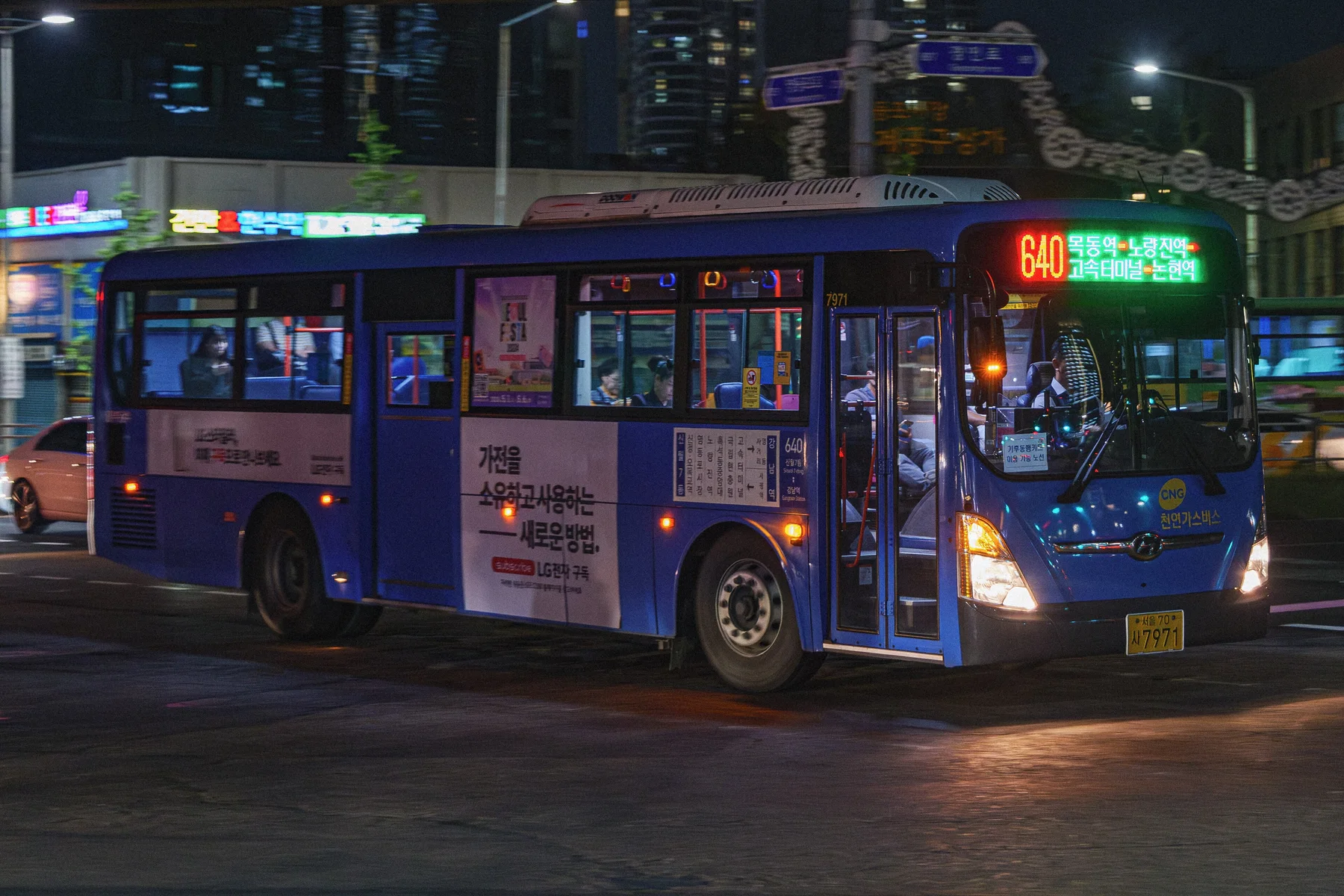
Cover photo: Seoul bus route 640 at night. Photo by TurnOnTheNight / Wikimedia Commons, licensed under CC BY-SA 4.0.
Sources: Seoul city-bus system and usage; metropolitan integrated transfer discount; cashless bus routes; Seoul night buses; VISITKOREA city-bus guide; and Seoul TOPIS bus information.