Currency Exchange in Korea: Cash, Cards, ATMs, and Fees
Where to get Korean won, when you need cash, and how to avoid unnecessary conversion fees
Korea is highly card-friendly, but a little cash is still useful. Compare airport exchange, city counters, international ATMs, and safer payment strategies.
Paying for things in Korea is usually easier than first-time visitors expect. International credit cards work in most hotels, convenience stores, cafés, department stores, attractions, and restaurants, so you do not need to exchange your entire travel budget into cash.
The most practical setup is a combination: bring two overseas-enabled cards, keep a modest amount of Korean won for situations where cash is easier, and add more only when you need it.
This guide explains where to exchange money, how to use Korean ATMs, when cash still matters, and why you should normally choose Korean won when a card terminal offers you a currency choice.
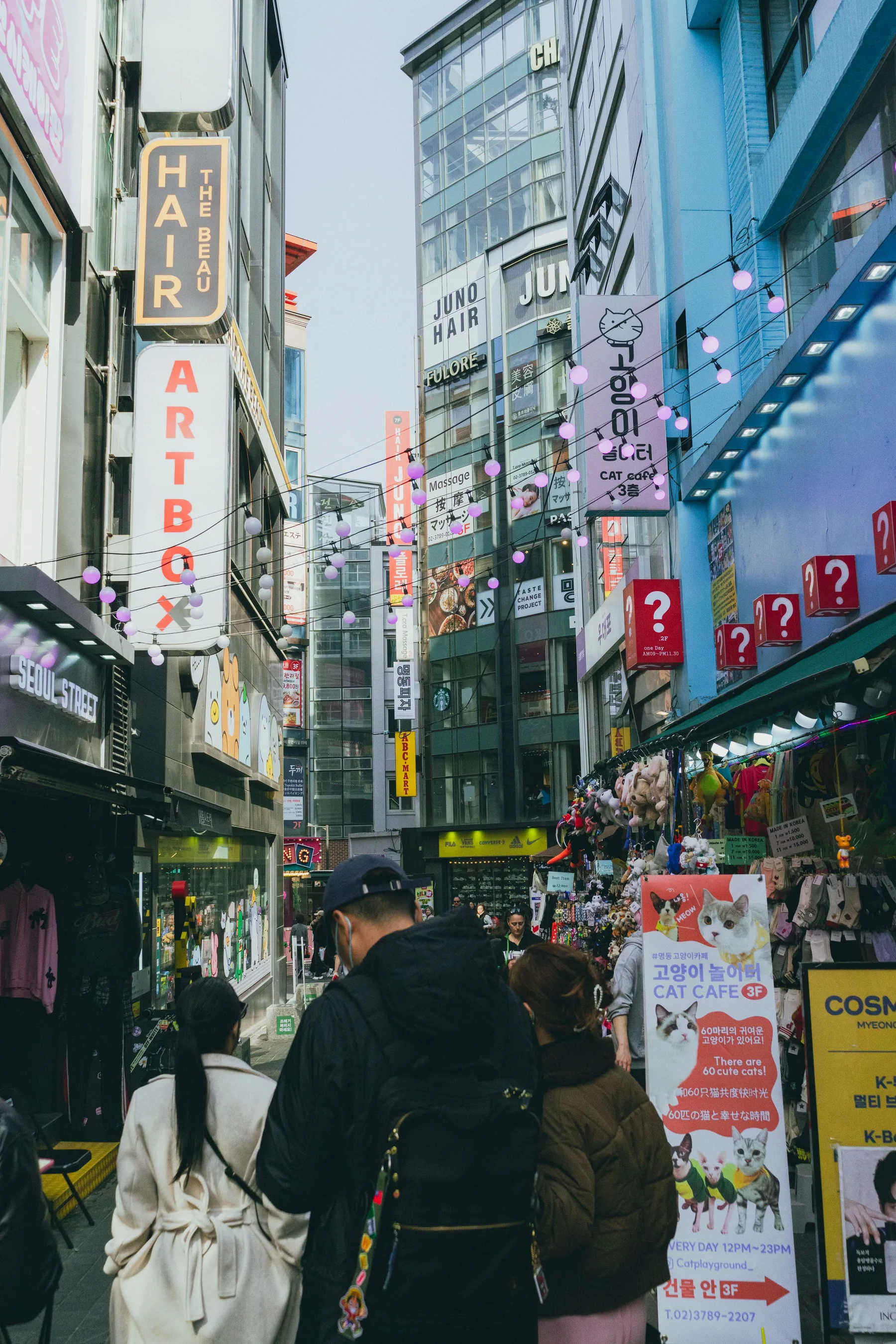
How Much Cash Do You Need in Korea?
There is no single daily cash amount that suits every traveler. Someone staying in hotels and eating at modern restaurants may use a card almost all day. A traveler visiting traditional markets, small food stalls, or rural areas may need cash more often.
Rather than exchanging a large amount in advance, prepare enough won for your first day and keep a way to obtain more later. This reduces the risk of carrying too much cash or returning home with a large unused balance.
Cash remains useful for:
- Some traditional-market vendors and street-food stalls
- Small independent shops or older neighborhood restaurants
- Transport-card top-ups at machines or stores that accept cash only
- Coin lockers and certain unattended machines
- Unexpected card-terminal or foreign-card authorization problems
- Small shops, festivals, and markets outside major tourist districts
You do not normally need cash to tip taxi drivers. Tipping is not customary in ordinary Korean taxis, and most taxis accept cards or transportation cards.
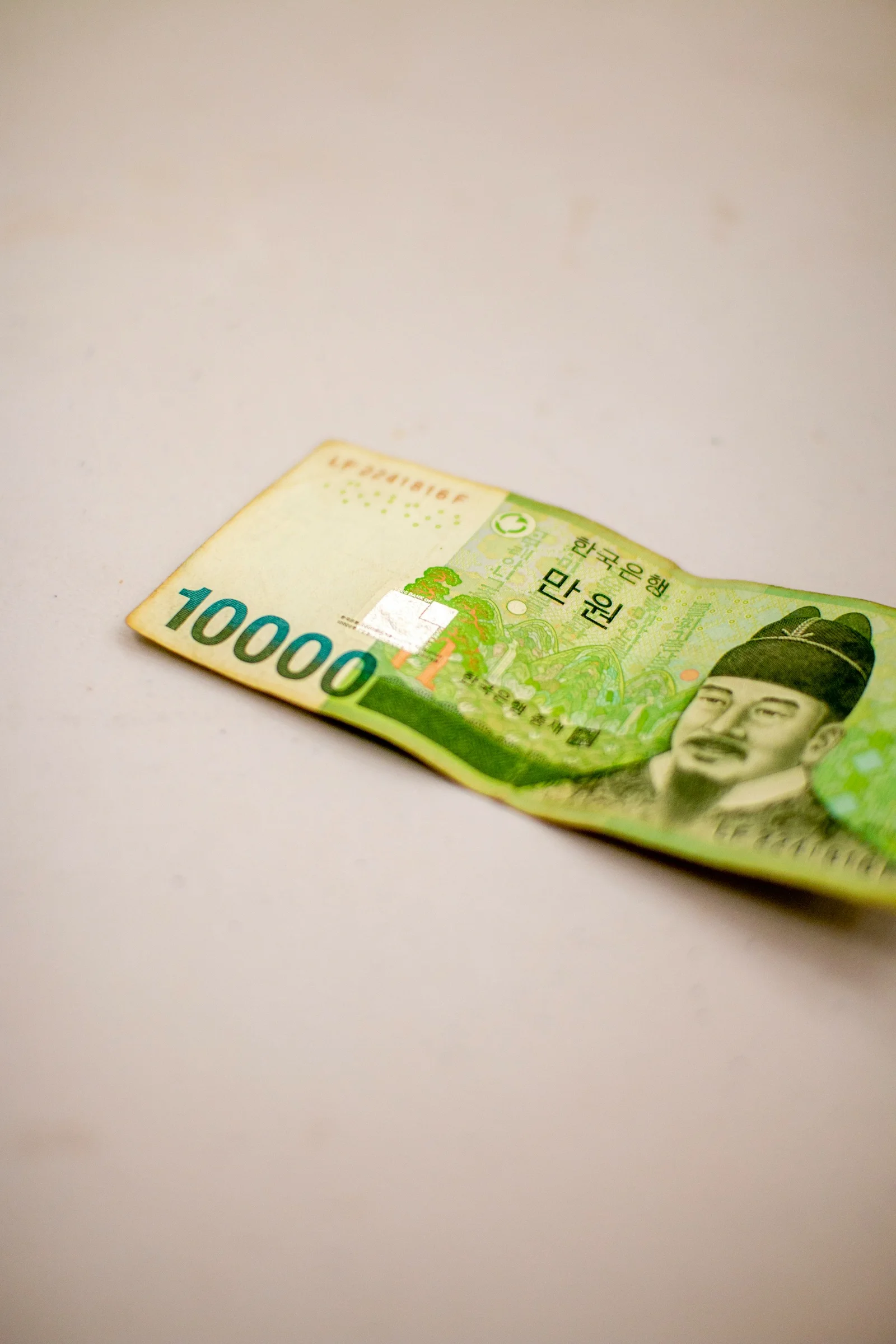
Should You Exchange Money at the Airport?
Incheon International Airport has bank-operated currency-exchange counters and ATMs in its passenger terminals. Some financial facilities operate around the clock, but locations and hours vary.
Airport exchange is convenient, especially when you arrive late or want cash immediately. It may not offer the most competitive overall conversion, but that does not mean you must avoid it completely.
A sensible arrival plan is to choose one of these options:
- Exchange only enough for your first day at the airport.
- Withdraw Korean won from an ATM that accepts international cards.
- Pay for the AREX, airport bus, or taxi by card and exchange money later in the city.
Before accepting an exchange, look at both the displayed rate and any separate fee. The most useful number is the final amount of Korean won you will receive.
Banks and Private Money Changers in Seoul
You can exchange major foreign currencies at banks and authorized private money changers. A bank or exchange counter may ask for your passport, so carry it when making a transaction.
Myeongdong has many exchange counters within a small area, which makes comparison convenient. However, no district or individual counter can be guaranteed to offer the best rate every day.
Before exchanging a significant amount, compare two or three places and ask:
- How much Korean won will I receive in total?
- Is a separate service fee included?
- Which exchange rate is being applied?
- Is there a minimum or maximum transaction amount?
- Will older, marked, or damaged foreign notes be accepted?
A “no commission” sign does not automatically mean the deal is better. The cost may already be reflected in the exchange rate.
Using an ATM with a Foreign Card
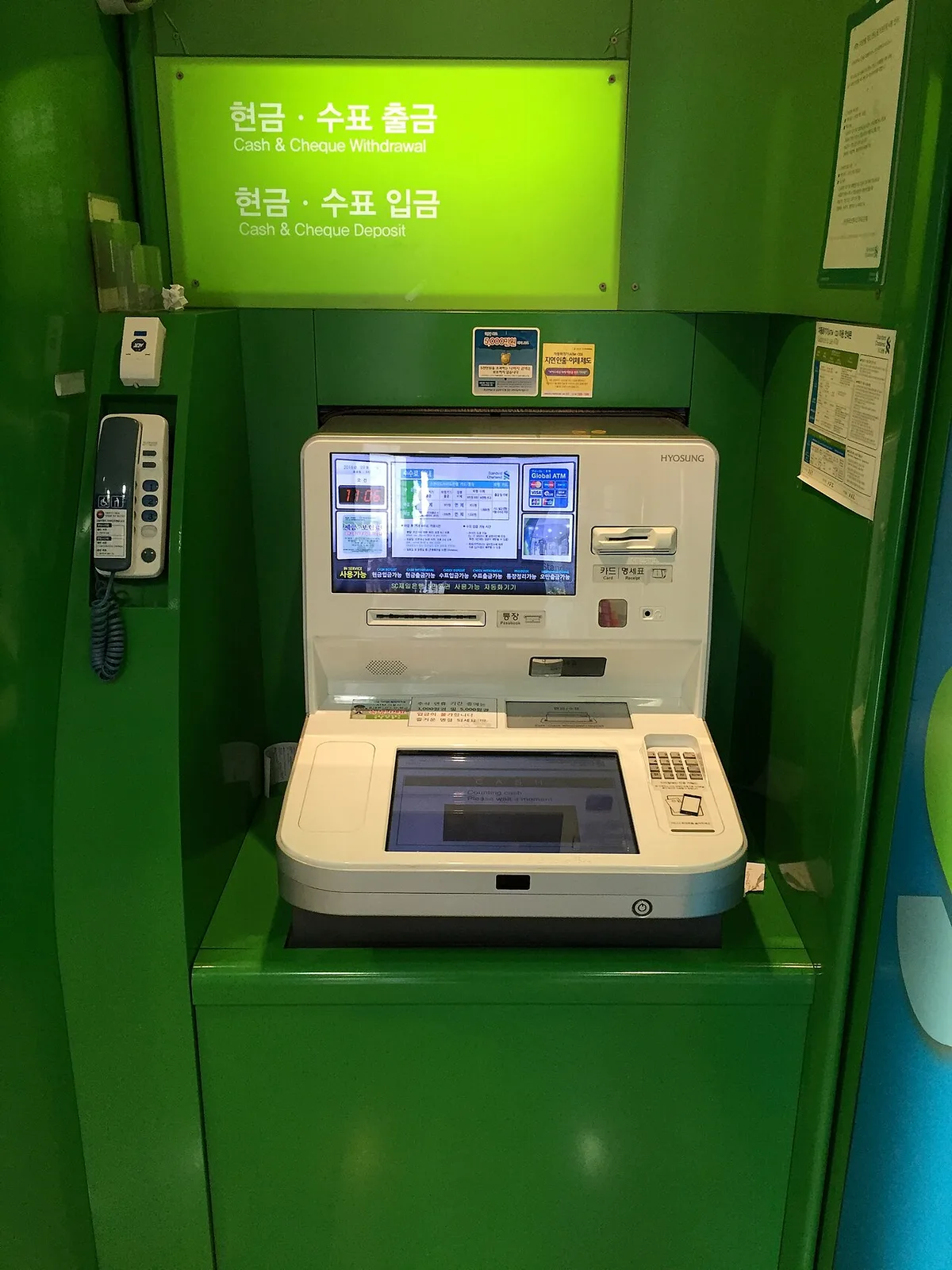
Not every ATM in Korea accepts cards issued overseas. Look for signs such as Global ATM, International Card, Visa Plus, Mastercard, or Cirrus.
ATMs at airports, major rail stations, tourist districts, and some convenience stores are more likely to support international cards. Even then, a machine may reject a specific card because of the issuing bank, network, withdrawal limit, or security settings.
An ATM withdrawal may include several separate costs:
- A fee charged by the Korean ATM operator
- An overseas withdrawal fee charged by your home bank
- A foreign-exchange fee charged by your card issuer
- An unfavorable conversion if you accept Dynamic Currency Conversion
Review the fee and exchange-rate information shown on the screen before confirming. If one ATM does not accept your card, cancel the transaction and try a machine from another bank rather than repeatedly forcing the same withdrawal.
Choose Korean Won, Not Your Home Currency
An ATM or card terminal may ask whether you want to pay in Korean won or in your home currency. The home-currency amount can look convenient because it is familiar, but it usually involves Dynamic Currency Conversion, or DCC.
With DCC, the merchant or ATM operator performs the conversion and may include an additional markup. Visa advises travelers who want to avoid that markup to pay in the local currency.
In Korea, the local-currency option will normally appear as KRW, Korean Won, or ₩. Choosing it allows your own card network or issuer to handle the conversion.
Your card may still charge a foreign-transaction fee, so check its terms before traveling. A card with no foreign-transaction fee is useful, but it is still wise to carry a backup from another bank or payment network.
Use More Than One Payment Method
A card that worked at your hotel may fail at a small restaurant or unattended kiosk. The problem does not necessarily mean the business refuses all international cards; it may be a network, terminal, or card-security issue.
A reliable payment setup includes:
- Two internationally enabled cards stored separately
- A modest amount of Korean won
- Your card issuer's app or contact details
- Knowledge of your overseas ATM withdrawal limit
- A transport card with enough balance for the next journey
Do not keep every card and all your cash in the same wallet. If that wallet is lost, your backup payment method should still be accessible.
A Practical Money Plan for Your Korea Trip
Before departure
- Confirm that overseas payments and ATM withdrawals are enabled.
- Check foreign-transaction and overseas-withdrawal fees.
- Find out whether your bank needs a travel notice.
- Bring two cards and store them separately.
- Prepare a small amount of won or exchangeable major currency for arrival.
After arriving in Korea
- Obtain only the cash you expect to use initially.
- Compare the final cost before exchanging or withdrawing.
- Top up your transportation card as needed.
- Keep larger cash reserves separate from your daily wallet.
During the trip
- Use cards for ordinary purchases when convenient.
- Use cash for markets, small vendors, and cash-only top-ups.
- Select KRW at ATMs and card terminals.
- Withdraw or exchange more only when your remaining cash becomes low.
Common Currency-Exchange Mistakes
- Converting the entire travel budget into cash before arrival
- Assuming one neighborhood always has the best exchange rate
- Looking only at “no commission” instead of the final amount received
- Accepting home-currency conversion without checking the rate
- Visiting a bank or exchange counter without a passport
- Keeping every payment method in one place
- Forgetting to enable overseas payments and ATM withdrawals
- Carrying only large-denomination notes for small purchases
What Should You Do with Leftover Korean Won?
Unused banknotes may be exchanged again at participating banks or airport exchange counters, although you will lose some value through the difference between buying and selling rates.
Coins are more difficult to exchange. Use them at convenience stores, airport restaurants, vending machines, or for small transport-card top-ups before departure.
Keep your exchange receipt until the trip ends. Some financial institutions may request transaction records when converting leftover won back into foreign currency.
The Best Strategy for Most Travelers
For most visitors, the goal is not to discover one perfect exchange counter. It is to avoid unnecessary fees while keeping enough payment options available.
Bring two suitable cards, carry a modest amount of won, compare the final amount before exchanging, and choose KRW whenever a terminal offers currency conversion. That simple combination works better than carrying your whole budget in cash or relying on a single card.
Information verified June 25, 2026. Exchange rates, fees, ATM support, withdrawal limits, and facility hours can change. Check your card issuer's terms and the conditions displayed by the ATM or exchange counter before confirming a transaction.
Cover photo: Myeongdong shopping street in Seoul. Photo by Nate / Pexels.
Sources: VISITKOREA shopping and payment guidance; airport foreign-exchange bank information; Incheon Airport financial facilities; Seoul Metropolitan Government currency exchange guidance; and Visa Dynamic Currency Conversion guidance.