KTX Train Guide: Booking, Boarding, and Travel Tips for Korea
How to book tickets, find the right station, board your train, and decide whether a KR Pass is worth it
Book and ride Korea’s KTX with confidence using current guidance on official tickets, stations, seats, luggage, SRT differences, and the KR Pass.
Korea's high-speed trains make it possible to add Busan, Gyeongju, Daejeon, Daegu, Gwangju, and other cities to a trip without spending most of the day in transit.
KTX tickets can be booked through Korail's official English service without a Korean national ID, and boarding is simpler than taking a flight. The important details are your departure station, train number, carriage, and seat.
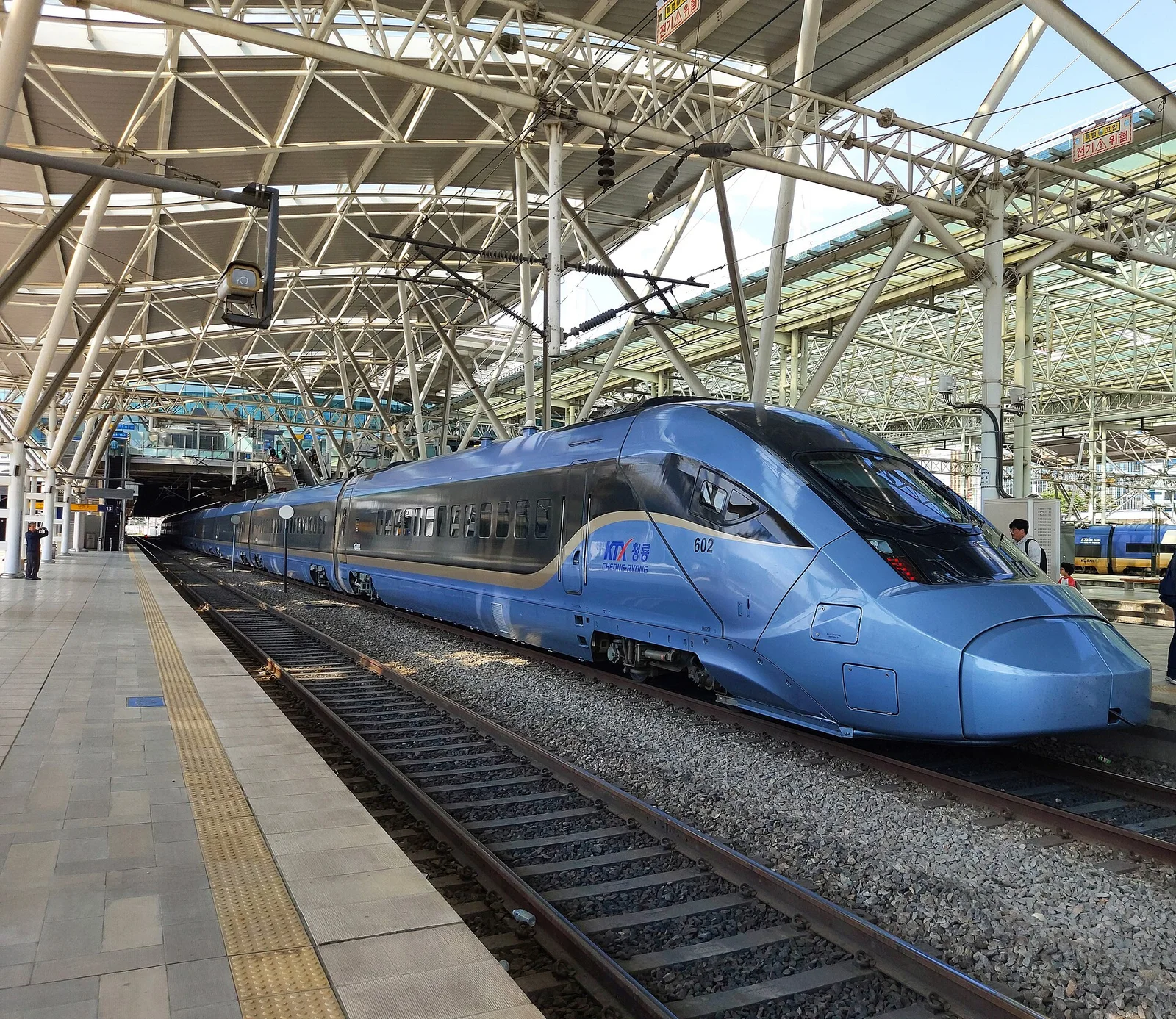
What Is the KTX?
KTX stands for Korea Train Express, the high-speed train service operated by Korail.
The fastest Seoul-to-Busan services take around two hours and 15 minutes. Approximate fastest journey times from Seoul include about one hour to Daejeon, one hour and 40 minutes to Dongdaegu, and around two hours to Gyeongju.
Unlike airports, major railway stations are usually in or near city centers and do not require a long check-in or security process. This makes high-speed rail especially convenient for city-to-city travel.
Trains on the same route do not always stop at the same stations. Compare the departure station, arrival station, and total journey time rather than choosing only by ticket price.
KTX and SRT Are Not the Same Service
KTX and SRT both use Korea's high-speed rail network, but they have different operators and primary departure stations in Seoul.
KTX
- Operator: Korail
- Main Seoul-area stations: Seoul, Yongsan, and Cheongnyangni
- Booking: Korail's official website or KorailTalk app
- KR Pass: accepted on eligible services
SRT
- Operator: SR
- Seoul-area station: Suseo Station
- Booking: SRT's official website or app
- KR Pass: not accepted
Suseo Station is connected to Seoul Subway Line 3, the Suin-Bundang Line, and GTX-A. SRT may be more convenient for accommodation in Gangnam, Jamsil, or Bundang, while KTX is often easier from Myeongdong, Hongdae, or central Seoul.
Include the journey from your hotel to the departure station when comparing trains. A slightly slower service from a nearby station may produce a faster overall trip.
How Foreign Visitors Can Book KTX Tickets
The safest booking route is Korail's official English website.
- Enter the departure station, destination, date, and number of passengers.
- Choose a train and available seat class.
- Enter the requested passenger and payment details.
- Complete payment and save the mobile or printable ticket.
A Korean resident registration number is not required through the foreign-language service. A Korean Korail membership account is not always necessary; non-member bookings can be retrieved using the information entered during the reservation process.
If an international card fails:
- Confirm that overseas online payments are enabled
- Try another browser or card
- Purchase from a station ticket counter or English-enabled machine
- Use an authorized sales channel and check its fees and refund rules
Korail has expanded foreigner-facing sales channels, including travel platforms and selected international payment services. Third-party rules may differ from Korail's own change and cancellation policies.
Tickets normally go on sale one month before departure at 7:00 a.m. Korea time. Popular Friday-evening, weekend, and holiday trains can sell out quickly. Special booking periods may apply around major Korean holidays.
Check the Departure and Arrival Stations Carefully
Not every KTX from the Seoul area departs from Seoul Station.
- Seoul Station: common for Busan, Daegu, Daejeon, and Gyeongju routes
- Yongsan Station: often used for Gwangju, Mokpo, Jeonju, and Yeosu directions
- Cheongnyangni Station: useful for Gangneung, Andong, and eastern routes
- Suseo Station: SRT rather than KTX
Always follow the station printed on the ticket.
When searching for Gyeongju, note that the high-speed station formerly known as Singyeongju Station is now named Gyeongju Station. It is outside the historic city center, so allow time for a local bus or taxi after arrival.
How to Board a KTX Train
Korean railway stations do not use airline-style check-in or routine passenger security screening.
- Find your train number and departure time on the station display.
- Wait for the platform number to appear.
- Check the carriage and seat numbers on your ticket.
- Use the platform signs or floor markings to find the carriage position.
- Board the correct carriage and take your reserved seat.
The train number matters. More than one service can travel toward the same city within a short period, so do not board based only on the destination.
Passengers normally walk directly to the platform without inserting their ticket into a gate. Keep the mobile or printed ticket available in case a crew member needs to check it.
For a first journey, arrive 20 to 30 minutes before departure. Large stations can be crowded, and buying food or walking to the platform takes additional time.
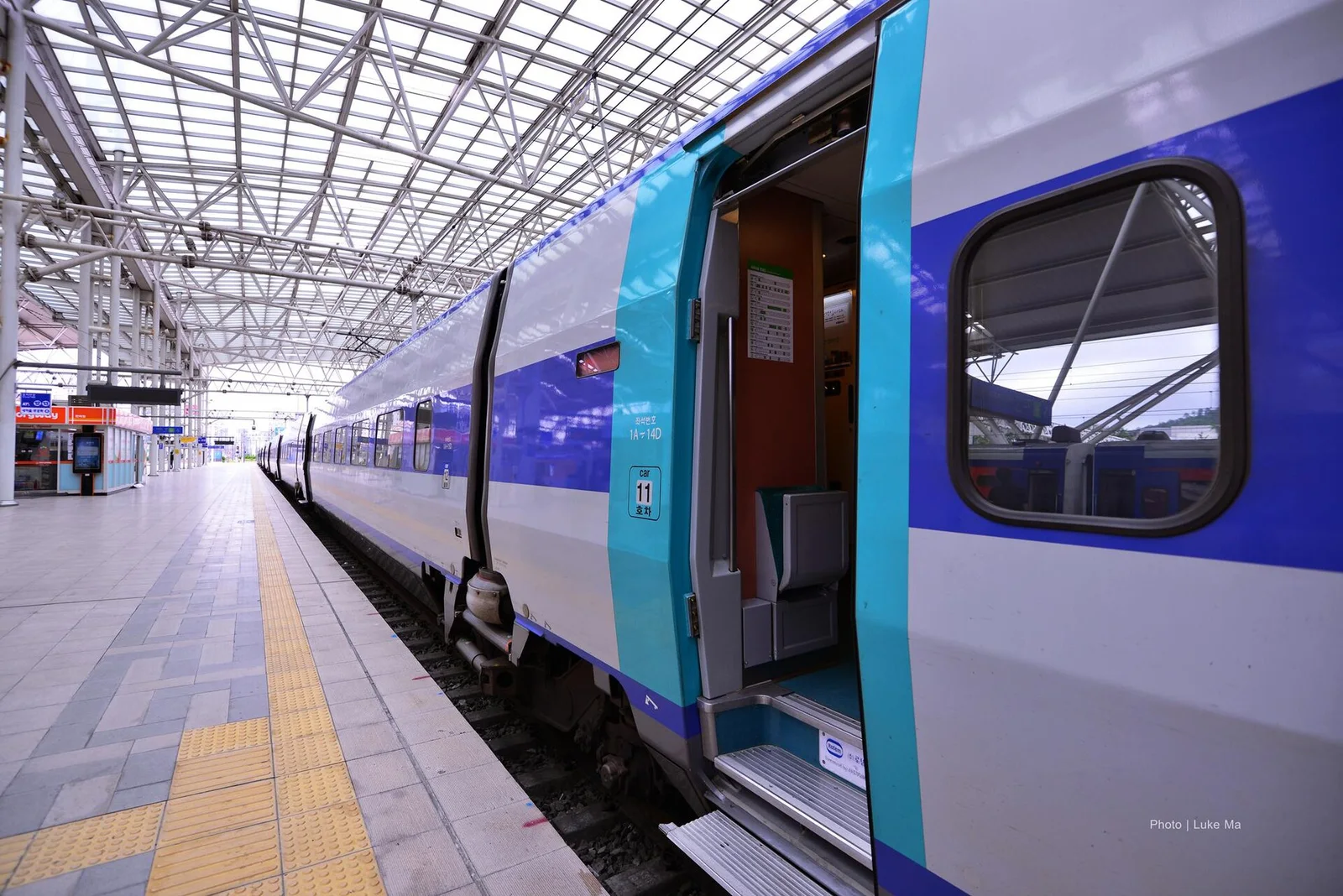
Seats and Travel Direction
KTX uses reserved seating. A ticket normally shows:
- Train number
- Departure and arrival stations
- Departure and arrival times
- Carriage number
- Seat number
Some booking screens allow you to choose a forward- or backward-facing seat. Check the seat map if direction matters to you or you are prone to motion sickness.
First class offers more space and a less dense seat layout than standard class. Do not expect an airline-style meal. Exact amenities can vary by train, but the main benefit is additional room and comfort rather than formal food service.
Luggage and Onboard Facilities
Large luggage racks are usually located near carriage entrances or between cars. Smaller bags can go on the overhead shelf.
There is no separate checked-luggage process. Keep valuables with you and never block the aisle or doors. Large-bag space can fill on weekends and holidays, so boarding promptly is helpful.
Facilities commonly available on KTX and SRT trains include:
- Toilets
- Baby-changing facilities on selected cars
- Free Wi-Fi
- Power outlets or charging facilities
- Drink and snack vending or sales facilities on some trains
KTX trains do not normally have a sit-down dining car. Buy food and drinks at the station before departure if needed. Eating at your seat is generally possible, but choose food that will not strongly disturb nearby passengers.
Is a KR Pass Worth Buying?
The KR Pass is designed for eligible international visitors using Korail trains during a limited period.
Current pass formats include:
- Flexible 2-day pass
- Flexible 3-day pass
- Flexible 4-day pass
- Consecutive 3-day pass
- Consecutive 5-day pass
- Saver Pass for groups of two to five travelers
Flexible passes allow selected travel days within a defined ten-day period.
A KR Pass allows standard-class seat reservations on eligible Korail services, but seat reservations are not unlimited. Current official guidance permits up to two reserved seats per day.
The pass does not cover:
- SRT trains
- City subway systems
- Certain temporary or tourist services
- Other trains excluded under the current terms
A single Seoul-to-Busan round trip may cost less with ordinary tickets. Compare the pass price with individual fares when planning several long-distance journeys within a short period.
Korail also offers KORAIL PASS+, which combines eligible rail-pass features with a NAMANE transport-card function. The added transport-card feature does not make subway travel free; it must be loaded and used like a normal transit card.
Common Mistakes to Avoid
Booking through a lookalike site without checking
Search results can include ticket agencies and unofficial-looking reservation pages. Confirm the domain and understand the seller's change and refund policy.
Confusing Seoul Station and Suseo Station
KTX commonly departs from Seoul Station, while SRT departs from Suseo. The stations are far apart.
Boarding based only on the destination
Confirm the train number, departure time, and carriage.
Arriving at the last minute
There is no airport-style check-in, but large stations require walking time. Arrive 20 to 30 minutes early on your first trip.
Assuming a large suitcase will fit beside the seat
Use the designated carriage luggage space. Capacity is limited.
Assuming the KR Pass covers every train
It does not cover SRT or city subways, and seats still need to be reserved.
The Simplest KTX Travel Routine
- Book through Korail's official English service.
- Confirm the departure and arrival stations.
- Save the train, carriage, and seat numbers.
- Arrive at the station 20 to 30 minutes early.
- Check the platform on the departure board.
- Board the correct carriage and take the reserved seat.
- Keep the ticket available until the journey is complete.
The station names and train types may look complicated at first. After one trip, KTX becomes one of the easiest ways to explore more of Korea without losing an entire day to travel.
Cover photo: KTX-Cheongryong at Seoul Station by 생각하는 나무 / Wikimedia Commons, licensed under CC BY-SA 4.0.
Information verified June 25, 2026. Booking rules, pass products, and onboard amenities can change. Check the Korail official foreign-language service, KR Pass information, and the SRT English booking service before travel.