Korean Convenience Store Food Guide: Easy Meals, Heating, Payment, and Travel Snacks
How to use CU, GS25, 7-Eleven, and Emart24 for breakfast, late-night food, train snacks, microwaves, hot water, and T-money
Use Korean convenience stores as practical travel infrastructure: breakfast, late-night meals, microwaves, hot water, snacks, drinks, and T-money.
Korean convenience stores are not just snack shops. For travelers, they are backup infrastructure: breakfast before early transport, late-night food near a hotel, water before a train, an umbrella during rain, a microwave meal when restaurants are closed, and sometimes a place to top up a transport card.
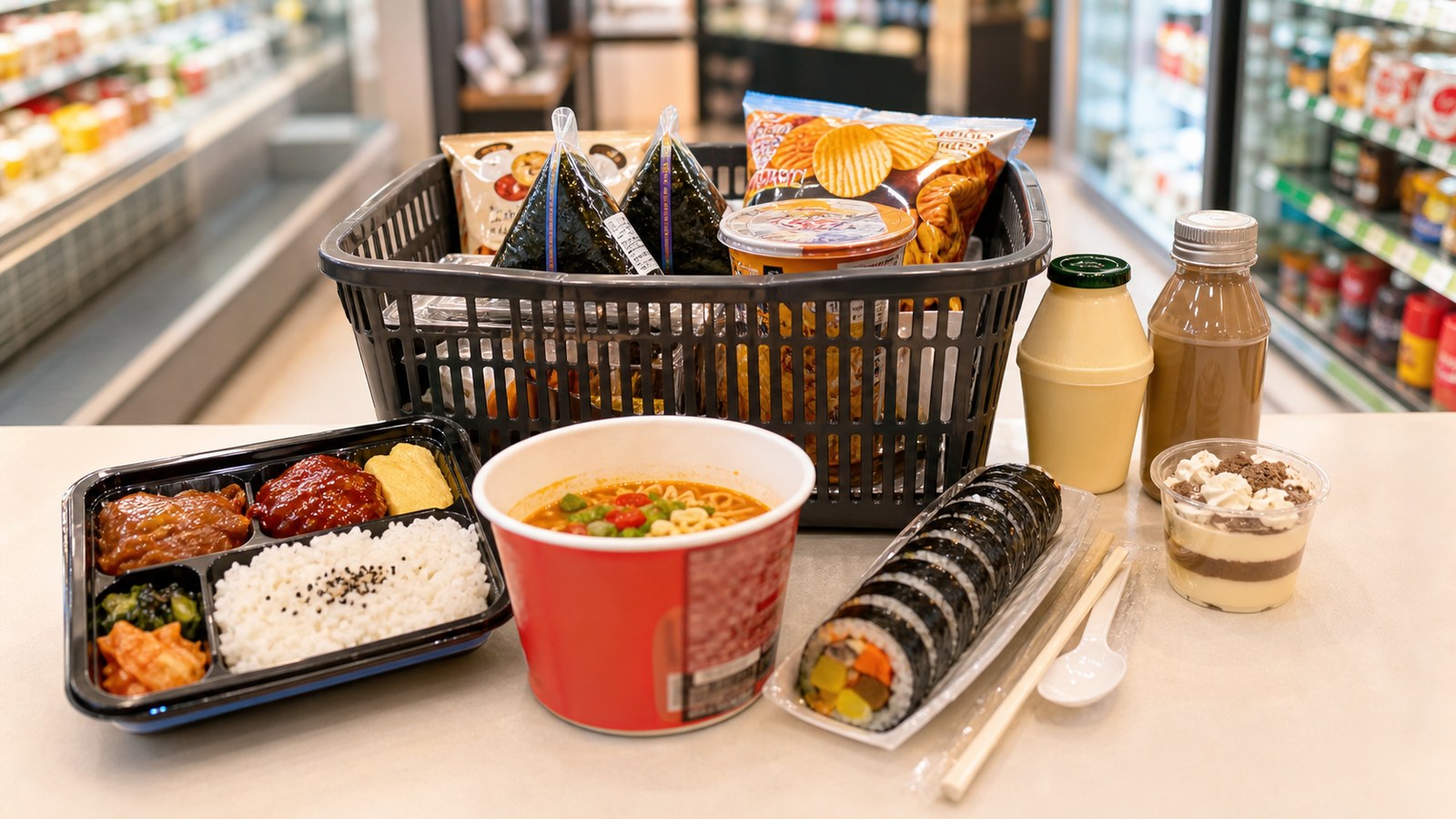
Use Them by Situation
Early morning: triangle kimbap, sandwiches, bakery items, coffee, milk, yogurt, or packaged fruit.
Late night: lunch boxes, cup noodles, hot bar snacks, drinks, and simple desserts.
Train or bus day: bottled water, snacks, kimbap, easy bread, and non-messy foods.
Rainy or tired day: microwave meals and cup noodles can save the evening.
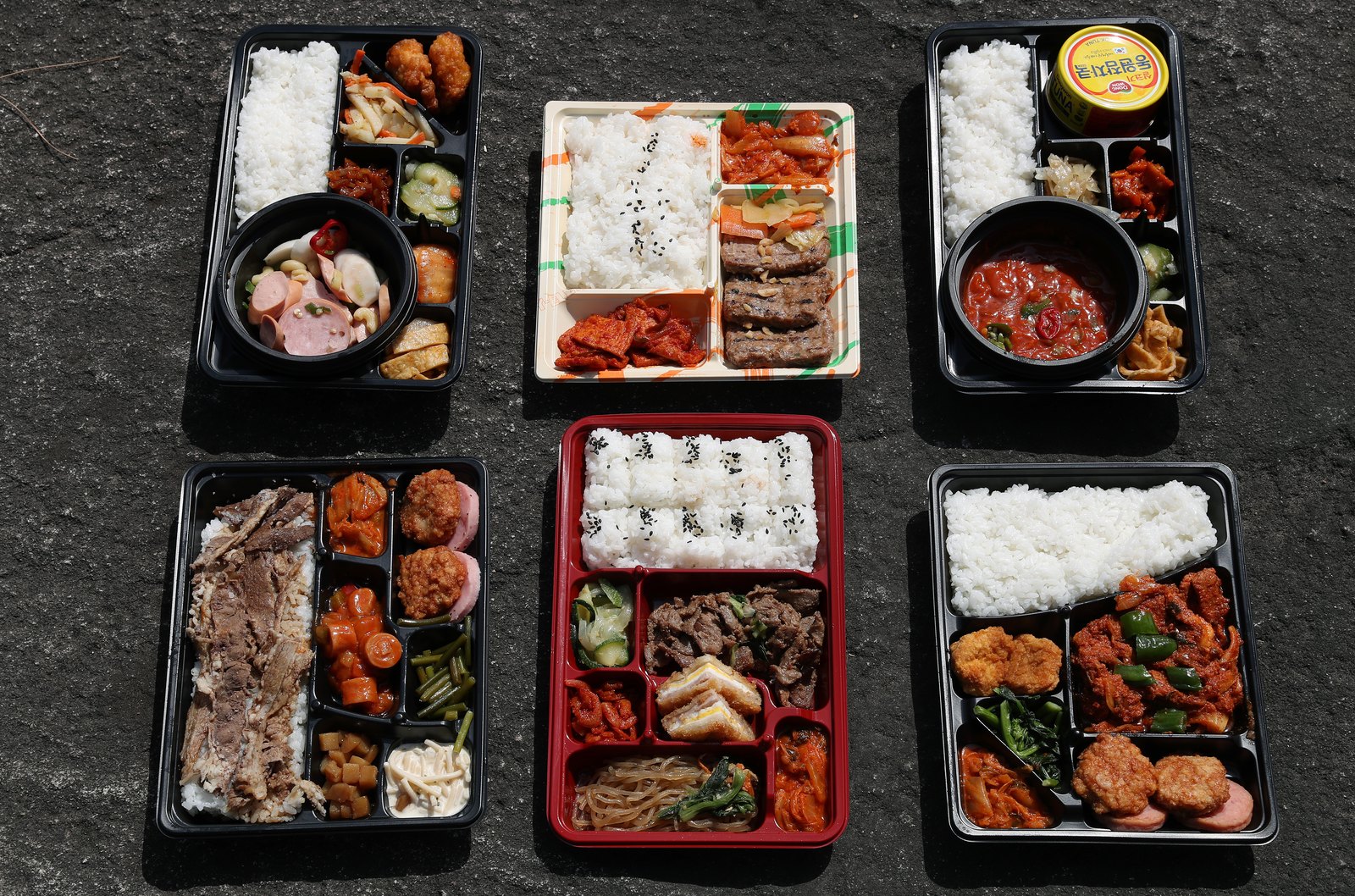
How Heating Usually Works
Lunch boxes and some packaged meals are microwaved in the store. Cup noodles use the hot-water machine. If you are unsure, show the item to the cashier or watch how other customers use the area. Do not microwave sealed packaging unless the product instructions clearly allow it.
What to Try First
Triangle kimbap is cheap, portable, and useful for rushed mornings.
Dosirak lunch boxes are more filling and usually need microwaving.
Cup noodles are easy, but check spice level before choosing the red packages.
Banana milk, coffee drinks, ice cream, and seasonal desserts are low-risk snack choices.
Payment and T-money
Most convenience stores accept cards, but carry a backup card or small cash. Many stores can sell or top up transport cards, but exact availability may vary by branch and card type. If one store cannot help, try another nearby branch or a subway station machine.
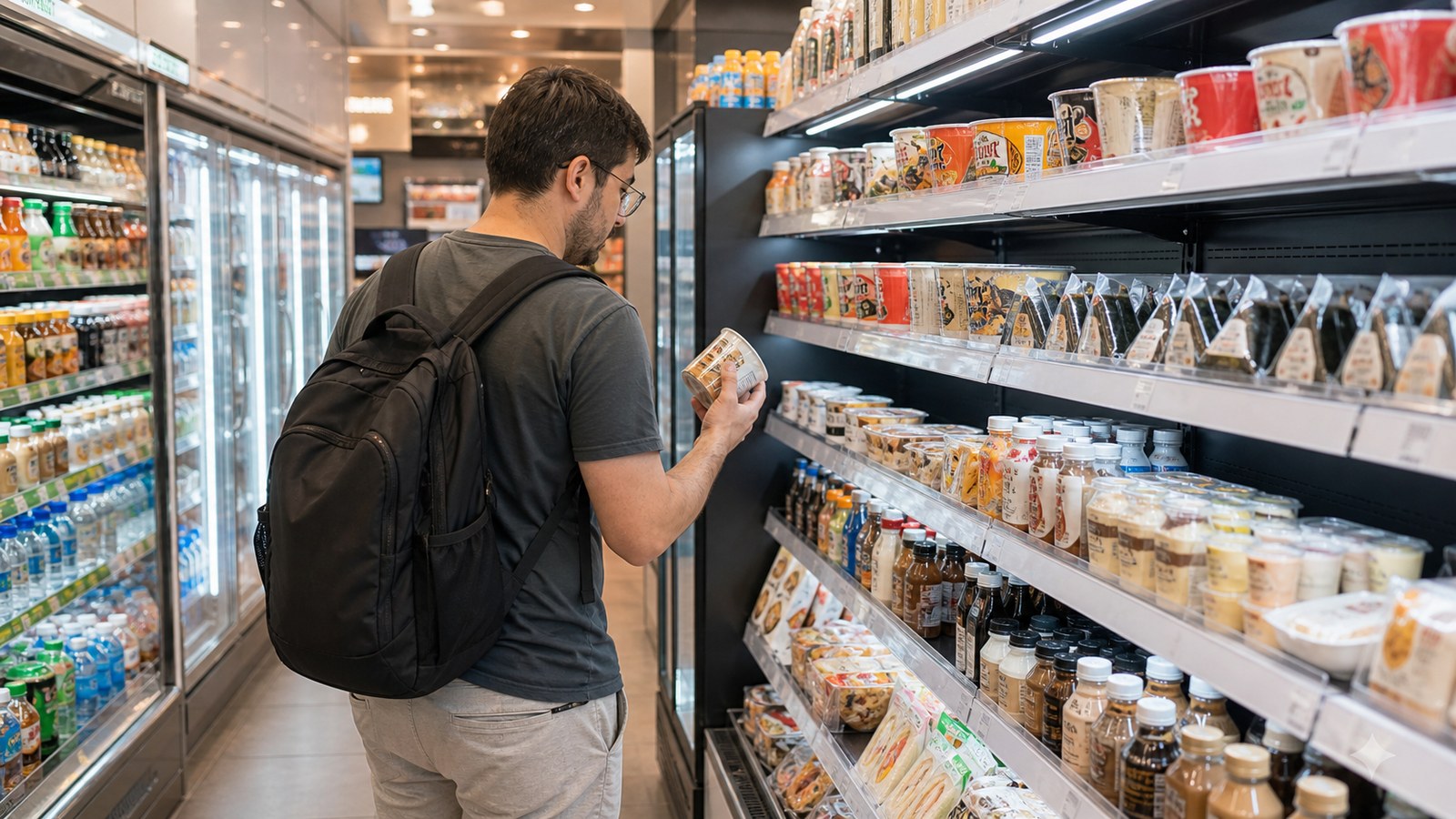
Eating Inside or Outside
Some branches have seating, some have standing counters, and some have no eating area. If there is no seating, take the food back to your accommodation or choose something portable. Do not assume every branch is designed like a small restaurant.
Allergy and Diet Notes
Packaged food labels may be difficult to read if you do not know Korean. Common hidden ingredients include pork, seafood, shellfish, egg, milk, wheat, soy, and spicy sauces. Use a translation app on the ingredient label if you have restrictions.
Common Mistakes
- Buying cup noodles without checking spice level.
- Expecting every branch to have seats.
- Forgetting to pick up chopsticks, spoon, or napkins.
- Assuming every T-money request works at every branch.
- Trying to eat messy food on a train or bus.