KTX vs SRT Guide: Which Korea Train Should You Book for Seoul, Busan, and Beyond?
Compare departure stations, booking channels, routes, KR Pass use, and hotel location before choosing a high-speed train
Compare KTX and SRT by departure station, destination, ticket availability, hotel location, transfer time, luggage, and booking backup.
KTX and SRT are both high-speed train services in Korea. For a traveler, they may look similar at first: both can take you quickly between major cities, both use reserved seats, and both are much easier than flying for many city-to-city trips.
The Station Usually Decides
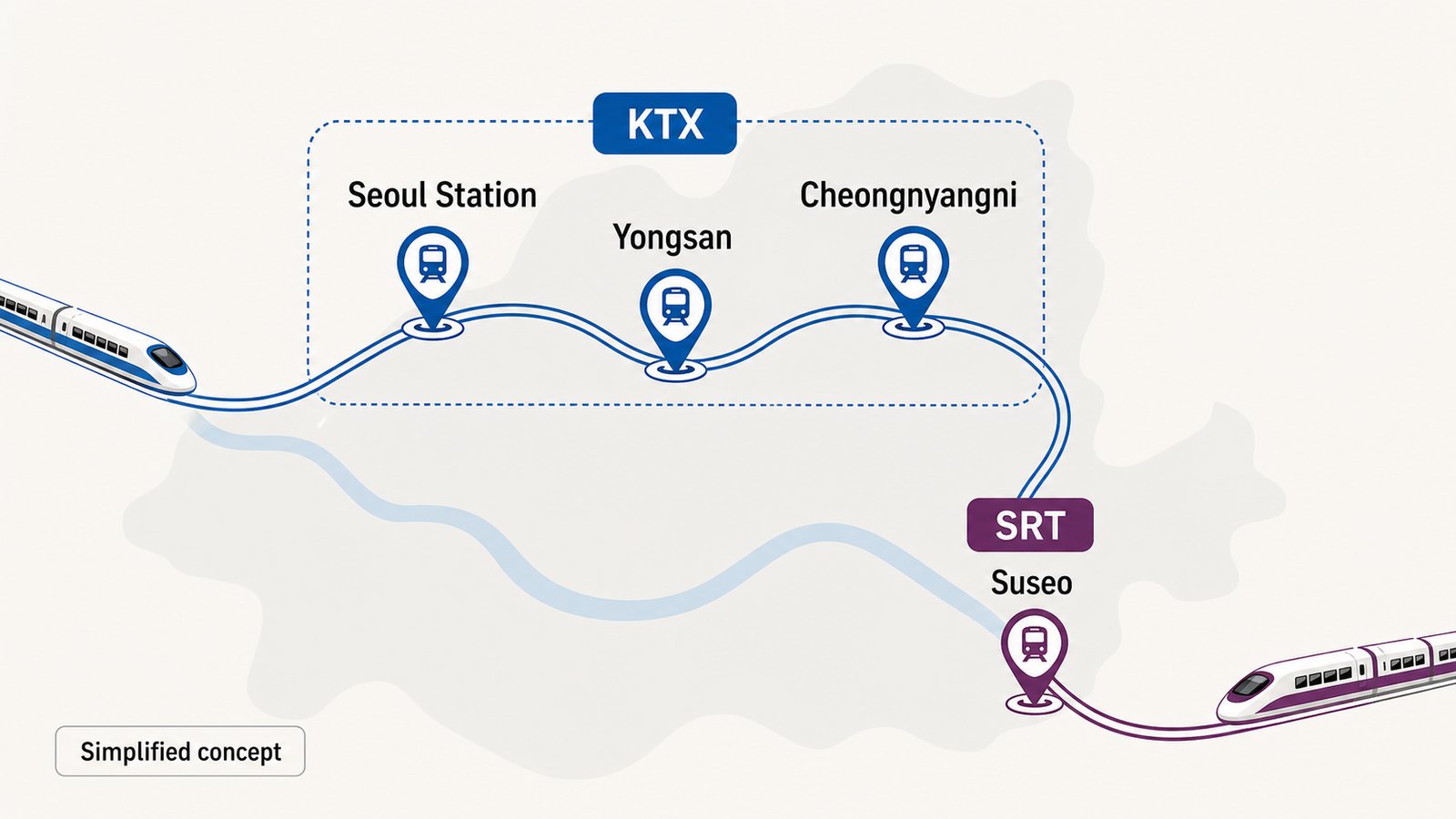
KTX and SRT are not only different train brands. For travelers, the bigger question is whether Seoul Station, Yongsan, or Suseo is easier from your accommodation. A faster train can lose its advantage if the departure station is far across the city.
The practical difference is not simply which train is "better." The better question is: which departure station fits your trip?
If you are staying near Seoul Station, Myeongdong, Hongdae, or central Seoul, KTX is often easier. If you are staying near Gangnam, Jamsil, COEX, or Suseo, SRT may save time. If you plan to use a KR Pass, KTX and other eligible Korail services matter more. If your preferred departure time has seats on one service and not the other, availability may decide for you.
This guide compares KTX vs SRT from a first-time visitor's point of view.
KTX vs SRT: The Short Version
KTX is operated by Korail. It is Korea's best-known high-speed train service and has a broad network from major Seoul-area stations such as Seoul Station, Yongsan Station, and Cheongnyangni Station.
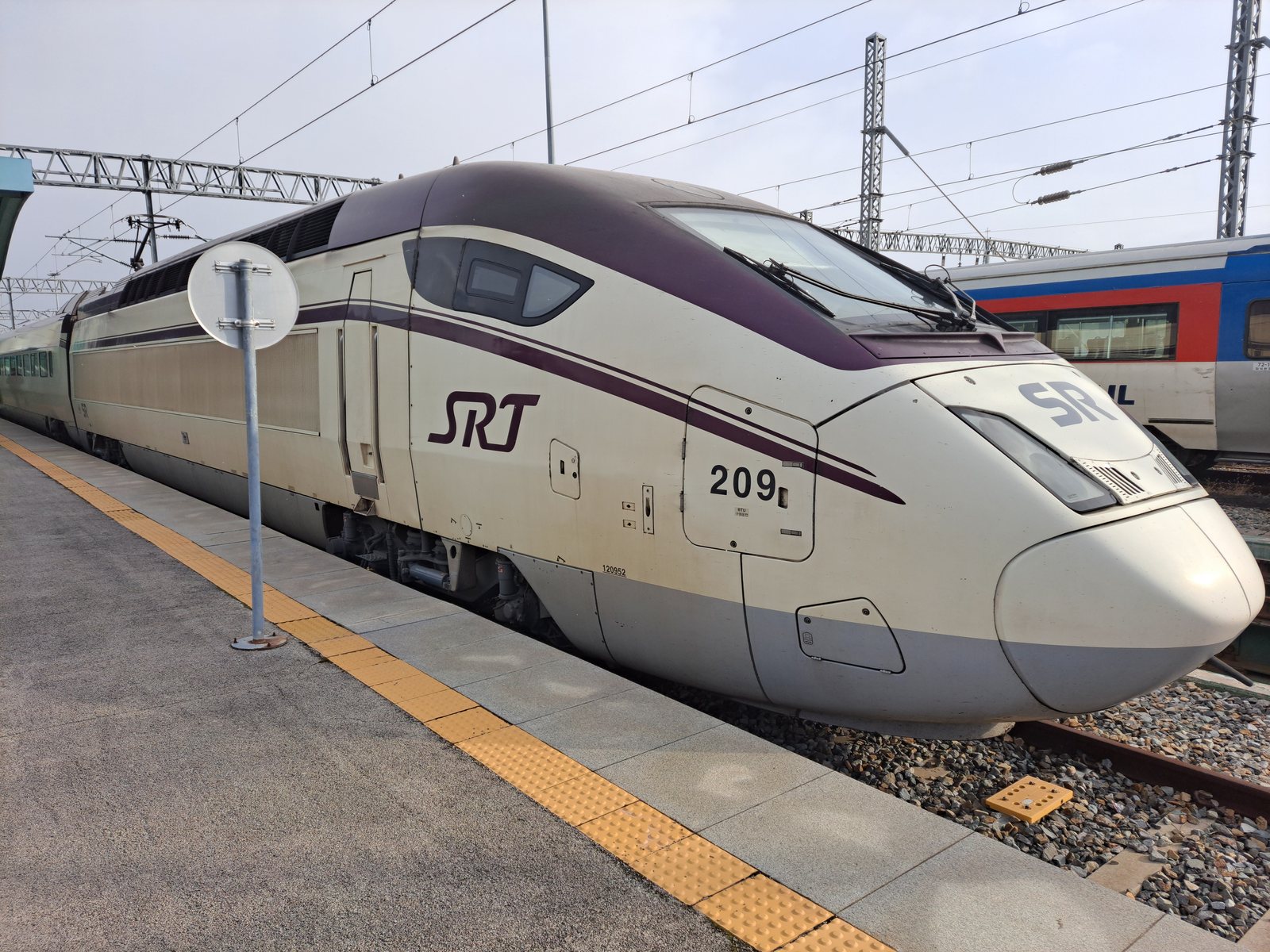
SRT is operated by SR. It is centered on Suseo Station in southeast Seoul and serves major high-speed routes from that side of the city.
For most visitors:
- Choose KTX if Seoul Station, Yongsan, or Cheongnyangni is easier from your hotel.
- Choose SRT if Suseo Station is easier from your hotel.
- Choose KTX if you are using a KR Pass on eligible Korail services.
- Compare both if your route is served by both and schedule matters.
- Do not choose only by the train name. Include the time from your hotel to the station.
The Biggest Difference Is the Departure Station
The most important KTX vs SRT difference is the station you need to reach before the train even starts.
KTX departure stations
KTX services commonly use stations such as:
- Seoul Station
- Yongsan Station
- Cheongnyangni Station
Seoul Station is convenient for many visitors staying around Myeongdong, City Hall, Seoul Station, Namdaemun, and parts of central Seoul.
Yongsan Station can be useful for some Honam and Jeolla direction routes, depending on the specific train.
Cheongnyangni Station is useful for some eastern and central routes, including routes toward Gangwon and other inland destinations.
The exact station depends on your train and destination, so always follow the station printed on your ticket.
SRT departure station
SRT is centered on Suseo Station.
Suseo Station is in Gangnam-gu, southeast Seoul. SR's English station information describes Suseo as a gateway connecting major Korean cities with the Gangnam area, and notes access through subway Line 3 and the Bundang Line.
For travelers staying around Gangnam, Jamsil, Samsung, COEX, or Suseo, SRT can be very convenient.
For travelers staying near Seoul Station, Myeongdong, or Hongdae, getting to Suseo may add unnecessary cross-city travel.

Think Hotel to Station, Not Just Train to City
Many first-time visitors compare only the train ride time. That can be misleading.
Your real travel time is:
Hotel -> departure station -> train ride -> arrival station -> final destination
For example, if an SRT train is slightly faster on paper but you spend much longer getting to Suseo Station, it may not save time. The reverse can also be true if you are staying in Gangnam and would need to cross Seoul to reach Seoul Station.
Before booking, compare:
- Travel time from your hotel to the station
- Subway transfers with luggage
- Taxi time during traffic
- Train departure time
- Seat availability
- Arrival station and onward transport
The fastest train is not always the fastest trip.
Routes and Destinations
KTX and SRT both connect Seoul with major cities, but their route coverage and frequency are not identical.
Common high-speed rail destinations include:
- Busan
- Daejeon
- Dongdaegu
- Gyeongju
- Ulsan
- Gwangju-Songjeong
- Mokpo
- Iksan
- Jeonju
- Yeosu-EXPO
- Jinju or Changwon area routes, depending on service
- Pohang, depending on service
SR's official English route page groups SRT service under route categories such as Gyeongbu, Honam, Jeolla, Gyeongjeon, and Donghae lines. KTX has a broader Korail network and may be more flexible for some destinations and schedules.
Because schedules and stopping patterns change, do not assume every city has equal KTX and SRT service. Search the exact route and date.
Booking KTX and SRT
KTX and SRT use different booking channels.
Booking KTX
KTX is booked through Korail's official foreign-language service or Korail-related channels. If you already read our full KTX guide, use that for detailed booking and boarding steps.
For this comparison, the key point is simple: KTX is a Korail service.
Booking SRT
SRT is booked through SR's official website, SRT app, ticket machines, or stations. SR's English ticket information lists websites, the SRT app, ticket machines, and stations as purchase locations.
Do not assume your KTX booking site and SRT booking site are the same. If a route does not appear on one site, check whether the other operator serves it.
KR Pass and Rail Pass Use
The KR Pass is important for some international visitors, but it is not a universal high-speed train pass for every operator.
In practical terms, think of KR Pass as a Korail-focused pass for eligible travelers and eligible Korail services. If you plan to use a KR Pass, KTX is usually the service you will compare first.
Do not assume KR Pass works the same way on SRT. Check the official Korail KR Pass terms before building your itinerary.
If you are only taking one or two train rides, ordinary point-to-point tickets may still be simpler. Compare the pass price with the actual routes you plan to take.
Price and Travel Time
Some travelers ask whether KTX or SRT is always cheaper or faster. The useful answer is: not always in a way that should decide your whole trip.
Price and travel time depend on:
- Route
- Train type
- Departure time
- Seat class
- Whether the train stops at many stations
- Booking availability
- Current fare and refund rules
If the price difference is small, station access may matter more. A slightly cheaper train can become less convenient if it requires a long subway transfer with luggage.
Check current fares and timetables on the official Korail and SR booking sites before purchasing.
When KTX Is Usually the Better Choice
KTX is usually easier if:
- You are staying near Seoul Station, Myeongdong, City Hall, Namdaemun, or central Seoul.
- You are staying near Hongdae and can reach Seoul Station conveniently.
- Your route is better served by Korail.
- You plan to use a KR Pass.
- You want more route flexibility.
- Your itinerary includes several cities connected by Korail services.
KTX is also a natural choice if you have already planned around Seoul Station or Yongsan Station.
When SRT Is Usually the Better Choice
SRT is usually easier if:
- You are staying near Gangnam, Jamsil, COEX, Samsung, or Suseo.
- Suseo Station is easier than Seoul Station from your hotel.
- Your route and preferred time are available on SRT.
- You are not using a KR Pass.
- You want to avoid crossing central Seoul before your train.
For travelers based in southern Seoul, SRT can be the more practical option even if KTX is more famous.
Example Decision Scenarios
You are staying in Myeongdong and going to Busan
Start by checking KTX from Seoul Station. It is usually simpler than going across the city to Suseo.
You are staying in Gangnam and going to Busan
Check SRT from Suseo first. Also compare KTX if the schedule or seat availability is better, but do not ignore the time to reach Seoul Station.
You are using a KR Pass
Check eligible Korail services first. Do not assume the pass covers SRT.
You are going to a city with limited service
Search both official booking sites and compare exact dates. Some destinations, departure times, or stopping patterns may make one operator clearly easier.
You are traveling during a holiday or weekend
Seat availability may matter more than preference. Book early and be flexible with departure time.
Common Mistakes
Avoid these KTX vs SRT mistakes:
- Thinking every high-speed train leaves from Seoul Station
- Confusing Seoul Station and Suseo Station
- Booking the right destination but the wrong departure station
- Forgetting the subway or taxi time from your hotel
- Assuming KTX and SRT use one booking system
- Assuming KR Pass covers every high-speed train in Korea
- Comparing train ride time but not total door-to-door travel time
- Waiting too long to book weekend or holiday trains
- Not checking the arrival station for your final destination
Before You Book Checklist
Before buying a ticket, check:
- Which station is closest or easiest from your hotel
- Whether your destination is served by KTX, SRT, or both
- The exact departure station on the ticket
- The exact arrival station
- Total hotel-to-station travel time
- Seat availability for your preferred date
- KR Pass eligibility, if you plan to use one
- Refund and change rules
- How much time you need with luggage
Information verified July 6, 2026. KTX and SRT timetables, fares, station assignments, purchase periods, refund rules, routes, and KR Pass terms can change. Check Korail and SR official channels before booking.