Seoul Subway Guide: Tickets, Transfers, Exits, and Mistakes to Avoid
Use the Seoul subway by understanding transport cards, directions, transfers, exit numbers, last trains, luggage, and common station mistakes
A practical Seoul subway guide for first-time visitors, focused on cards, transfer decisions, direction checks, exit numbers, last trains, and luggage situations.
The Seoul subway is usually the best way to move around the city, but the hard part is not tapping in. The hard part is choosing the correct direction, making transfers without following the wrong exit sign, and leaving through the exit that actually matches your destination.
Before You Ride: Card and Route
Most visitors use a transport card such as T-money or another compatible card. Keep one card per adult passenger. Do not assume one card can tap several adults through the same gate.
Before entering the gate, check the final station direction in your map app. Line color is not enough because each line runs in two directions and may have branches.
A First Ride You Can Practice
Suppose you are staying near Hongik University Station (홍대입구역) and want to reach City Hall Station (시청역). Both have Line 2 platforms, so start by entering the two exact station names into a route app. Check the recommended direction and the next station shown for your platform before tapping in; the line loops in two directions, and a Line 2 sign by itself does not tell you which train is the shorter ride. At City Hall, look up the exit for your actual destination before going upstairs. If your hotel is not near Hongik University Station, repeat this method with your own start point rather than copying the sample route.
The official Seoul tourism subway guide and map explains tickets and provides a downloadable map (checked September 26, 2026). For a complex transfer or late return, see our transfer and last-train guide. Live routes and the last service depend on the day and direction.
Transfers Are Inside the Paid Area
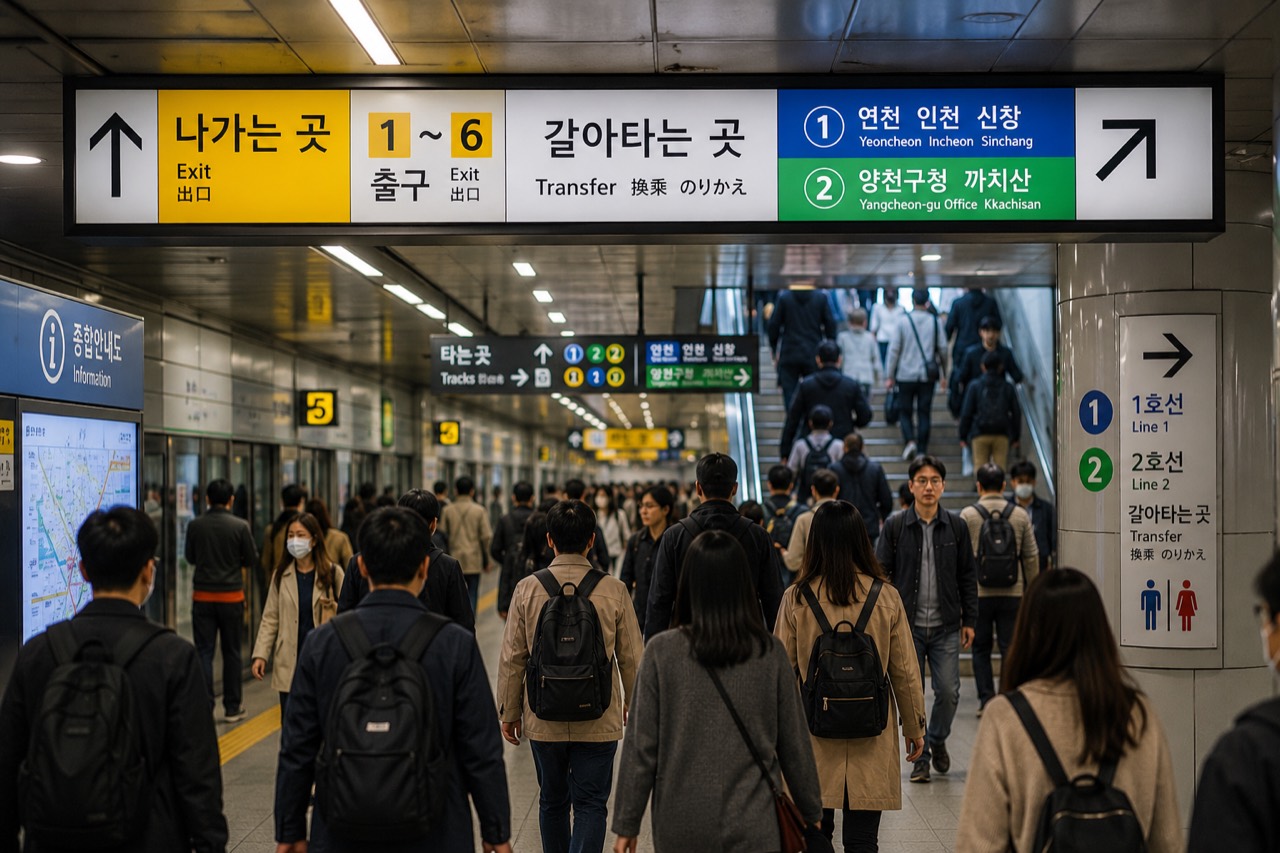
During transfers, follow signs for the next line, not signs for street exits. A common mistake is leaving the paid area by accident and then needing to re-enter. In large stations, transfer walking time can be longer than expected.
Exit Numbers Matter More Than Tourists Expect
Many Seoul stations have multiple exits spread across large intersections or underground shopping areas. The wrong exit can put you on the opposite side of a wide road. Check the exit number for your cafe, hotel, market, palace gate, or bus stop before you leave the platform area.
When Luggage Changes the Best Route
The subway is cheap and useful, but it can be tiring with large luggage during rush hour or at stations with long transfer walks. If you are arriving from the airport, compare subway transfers with airport buses or taxis before choosing only by price.
Last Train and Late Nights
Last train times vary by line, direction, and final destination. A train may not run to the end of the line late at night. Check the exact route before your evening plan, especially in Hongdae, Gangnam, Itaewon, or around late concerts and events.
Common Mistakes
- Following an exit sign during a transfer.
- Checking only the line color and not the train direction.
- Leaving through the wrong exit and adding a long street crossing.
- Trying to use one card for several adults.
- Assuming the last train goes all the way to your destination.